Category: Your Money

  • 2020 Homeowner Relief Stimulus: Do you Qualify?

    2020 Homeowner Relief Stimulus: Do you Qualify?

    If you own a home, chances are high that you’ve been giving some serious consideration to refinancing or seeking some relief from your mortgage payment.


    For homeowners who are having trouble making mortgage payments, forbearance rules are still in effect as part of the CARES Act. Regulators haven’t determined when loans backed by Fannie Mae or Freddie Mac will wind down forbearance. Homeowners with loans insured by the Federal Housing Administration are being asked to contact their servicer and request forbearance before Dec. 31.

    Senate Majority Leader Mitch McConnell (R-KY) tweeted the announcement of the second bill, saying it comes at an important time for Americans during the holiday season.

    “As the American people continue battling the coronavirus this holiday season, they will not be on their own,” he tweeted. “Congress has just reached an agreement. We will pass another rescue package ASAP. More help is on the way.”

    If you search for government or Congress mortgage relief, you’ll find results about programs like HARP and FMERR. But the information you see might be misleading. HARP and FMERR, the two major relief programs, are now expired. Even the CARES Act, which offered temporary relief from mortgage payments during COVID, won’t lower your loan costs in the long term. There’s just one large-scale relief program for 2020 that helps homeowners the way HARP and FMERR did.
    The Fannie Mae high LTV refinance option (HIRO) is still actively helping homeowners refinance with little or no equity in their homes.

    If you are in decent shape with your Mortgage and are able to make payments, you may want to consider refinancing your loan.

    Why Refinance?
     
    Everyone knows that mortgage rates have fallen to record breaking lows, but did you know about the “adverse market refinance fee” that took effect on Sept. 1 2020? This fee will apply to most loans sold to Fannie Mae and Freddie Mac. As an example, if you’re looking to refinance a $350k mortgage, the fee would cost you an additional $1,750.

    Other reasons to refinance:
    1. Build your equity
    2. Improve your loan terms
    3. Get a better interest rate

     
    If you are looking to refinance, make sure you check into the following items:

    1. Mortgage rates are currently below 3%, which means that almost 18 million home owners can save money by refinancing.
    2. Closing costs, which typically account for about 2%-3% of your loan amount should be taken into account.
    3. Do you plan on moving? If you’re looking to sell your home in a few years, you may not save enough money with a refinance to make up for what you’ll spend in closing costs.
    4. Make sure your credit score is in good shape. You most likely will not be able to score that low interest rate unless your credit score is above 700+.

    The bottom line is to make sure you consider all of variables which may impact your unique situation. Here are tips when choosing the best mortgage loan refinancing company

    1. Read lender reviews. Happy customers might write great reviews about a company, but folks who have a bad experience will DEFINITELY write a bad review.
    2. Shop around online. Make sure to compare reputation, rates, and options before deciding.
    3. Shop your rate. Once you have a rate from a company, don’t be afraid to shop it with the competition. If you don’t ask, you won’t get.
    4. Know your credit score. A lender will use your credit score one of the main factors in deciding your interest rate. Make sure you’re aware of your credit score and history.


  • How to Sell Your Home Fast!

    How to Sell Your Home Fast!

    Selling your home is a big deal. You want to be able to sell your house quickly and find the right people who buy houses in your area. You want to get your home looking nice and sell it for the right price, but all of the work seems overwhelming and like it will take up too much of your time. The good news is with the right plan and the right real estate agents near you, you will be able to get that home on the market and sold in no time.

    Some of the steps to consider when you are ready to sell your house quickly include:

    The First Steps When You are Ready to Sell Your Home

    When you are ready to sell your home, there are a few steps that you must keep in mind. Knowing how these steps work and being prepared for them is one of the best ways to get the most out of the sale and ensure that you can get moved out quickly. Some of the steps to take to get the most out of your real estate investment includes:

    Working with a Real Estate Agent

    One of the first things that you should do when you are ready to sell your home is find real estate agents near you. Some people want to go the “for sale by owner” route, but this can take a lot more time and effort to complete than doing it with an agent. Be aware that it does cost a commission, or a percentage of the sales price, to hire a real estate agent. But considering they often take on all the work and can handle the showings, the legal documents, and more, they are often worth it to get results.

    How an Agent Can Help You

    There are a number of benefits to hiring a real estate agent rather than trying to do it all on your own. Some of these include:

    1. They help you list your home at the right price. This helps you to get the highest price possible, without your home sitting on the market forever.
    2. They can present your home in a way that makes it more appealing to potential buyers. You love your home and that is great, but a real estate agent knows how to make it shine to a buyer.
    3. They can bring in more potential buyers. Most buyers like to work with an agent. And many times your agent will already have a list of people who may have some interest in the home. This helps you to get the best offer possible.
    4. They handle all of the paperwork for you. This is one of the most difficult things to do when you try to sell your home on your own. With the help of a real estate agent, you will not have to worry about all of the paperwork and legal stuff because they will do it all.
    5. The agent can get the best offer from each buyer. When the home sells for more, the agent earns more. This incentivizes them to get a better offer on your home.
    6. Can negotiate after the inspection. While you most likely will need to get a few things done on your home after the inspection, an agent will make sure the work is kept to a minimum.
    7. Speeds your closing time. This helps you to get the home closed on and the money in your account so much faster than before.

    Typical Costs for a Real Estate Agent

    There are several factors that will come into play when you have to pay for your real estate agent. Some agents will charge more if the sale price is below a certain threshold and then will lower the rate if the price is higher. Some may have other deals and incentives to get sellers to work with them. The average commission for most real estate agents is 6%.

    Before you sign with an agent, take the time to ask about the commission they will earn. This helps you be prepared and can make it easier to factor in this cost when you finally get an offer on the home. You as the seller will be the one who will pay the commission to the real estate agent. This 6% is often split between the buyer’s and the seller’s agent, but the seller is still responsible for the whole amount.

    Picking a Good Sale Price

    The next thing that we need to take a look at is how to pick out a good sales price for your home. There are a lot of different things that go into determining a price for your home. While you want to get top dollar for your home, you do need to be realistic about what a buyer is willing to pay.

    To determine the price of your home and what to sell it for, you must consider its location, how big the home is, how many rooms and bathrooms, any upgrades, and even what other homes in the area are selling for as well. And since each home is a little different and very unique, this can be hard.

    One way to figure out a fair sales price on your home is to perform a “comps” analysis. This is when you and your agent will look at some of the recently sold comparable homes on the market. While it may be hard to find one exactly like your home, it can give you a better idea of how much similar homes in your area have sold for.

    This is also why it is important to work with that real estate agent we talked about earlier. They know how to handle the pricing of your home and will help explain it along the way. They can take in all of the factors for you and come up with a fair price that is likely to sell your home quickly.

    Staging Your Home

    If you have already moved out of your home and no longer live there, one way to sell it faster is to stage the home. This helps to give your potential buyer a look for how the home can be used and gives them a vision of all the potential in the home. Never leave the home completely empty because this slows down the process.

    List the Home and Start Showings

    When you are ready, your agent will come over and sign some paperwork with you. This helps both of you be on the same page the whole time and can avoid confusion later on. The agent will also take pictures of the inside and outside of the property so they can show potential buyers, both online and in person. It is then time for the agent to list the property and wait for the calls to come in.

    At some point, you will need to show your home. The days of  an ‘Open House’ are gone for now, and most agents will hold private showings. The agent can handle this, but you must make sure the home is clean and ready to go. And you may have to be out of the way for a bit. Sometimes it only takes a few showings and sometimes you may need to deal with quite a few showings. But these are the best way to sell your home. All buyers will want a chance to look through the home and see if it is right for them.

    Accepting an Offer

    At some point, you will get an offer on your home. If the offer sounds good to you, you can accept it and move on with some of the inspections and other things that need to get done. You can also provide a counteroffer to better meet the needs you have if the buyer’s offer is close to your original offer. If the offer is way off, you can choose to decline the offer.

    The offer will often include information on what the buyer expects. They will say what they want to purchase the property for along with the preferred closing date, any inspections they want, and other contingencies. The most common contingencies including the buyers securing their financing and the buyers selling their other home.

    The Different Types of Inspections

    Your buyer may choose to do a few different inspections to make sure the home is safe and secure. If there are some major problems with the house and they are found during the inspection, then you will be responsible for them. Most home buyers choose to do a full home inspection that checks out quite a few different things, but they can also do a few other inspections based on their needs. The most common inspections include:

    1. Pest and rodent inspection
    2. Radon inspection
    3. Chimney inspection
    4. Roof inspection
    5. Lead-based paint inspection
    6. Flooding damage inspection
    7. HVAC inspection

    As we mentioned, the full-home inspection is the most common, though some may choose the others if these problems are common in your area. The buyer will usually put this in their offer so you can decide which inspections you want to participate in ahead of time. The cost of the inspection falls to the buyer. The cost to fix anything falls to you.

    If there are some repairs necessary on the home, you can typically negotiate these. When the buyer has some minimal repairs to do, you may consider doing them and finishing the process. Other options are to offer the home “as is” so you won’t do any repairs or offer a credit for the work to be done. The credit may work if there is a time crunch on the sale and you don’t have time to get it done. Homes sold “as is” often take a lot longer to sell.

    Closing On Your Home

    Once all the inspections are done and you have moved out of the home, and your home buyer has secured their financing, you can close on the home. These often happen at two different times. You will meet with the lender or a title company to sign off on the home and agree to the sale.

    Later, sometimes the same day and sometimes later depending on the schedules, the buyers will go in and complete their paperwork to buy the home. The funds will go to pay off the rest of your mortgage, your real estate agents fees, and any other closing costs that are necessary. Whatever is left will be deposited in your account and can be used for purchasing your new home, paying off debt, or other uses depending on your needs.

    Typical Closing Costs

    There are a few closing costs you will need to pay before you get any money from your home sale. Some of these include:

    1. Any attorney’s fees for writing up the documents.
    2. Credits towards the closing costs that you and the seller agreed on.
    3. Any HOA fees if applicable.
    4. The prorated property taxes.
    5. Any escrow that is agreed on and other closing fees.
    6. Title insurance
    7. Transfer tax
    8. Agent commission.

    There are some other fees that may be required based on the bank you work with and where you live. You and your agent can discuss these fees before closing so you aren’t caught by surprise.

    Are the Rules Different in Each State?

    There are a few things about selling a home that will vary based on the state you live in. In fact, depending on where you live in each state the rules may be slightly different as well. Knowing what these differences are in your local area can be tough, but this is another benefit of working with a real estate agent to get things done.

    First, the amount in taxes you pay will vary based on one state to the next. Some states will require the seller to pay taxes on the home up to a certain point and others will require the buyer to handle this. Some states, including California, have a special tax on any home sold that may add to the closing costs you must work with.

    Most states have requirements that the seller needs to include any information about the property that may deter the buyer from making the purchase. This is often presented to a potential buyer before they even put an offer in on the home. This could include any updates you did on the home, along with any potential problems that you know about.

    You may also need to work with an escrow account. The way that this is used will depend on the state you live in but allows a little protection on both sides. It ensures that both parties know where the money is and they can get it back if things go south during the deal. Talk with your real estate agent to find out if an escrow account is necessary for you.

    Where is Everyone Moving During the Covid-19 Pandemic?

    Due to Covid-19 pandemic many Americans are ready to live the cities and move somewhere more rural. This is great news if you have a home for sale in a rural area as you are more likely to attract a good buyer for a good price.

    In fact, six out of ten Americans have said that they would consider moving to a less populated area. Some may have been considering this before. Some may be tired of living with all of the health mandates. And some see these rural areas as safer areas to be because with fewer people there, it is a much safer place to be right now.

    This is a common trend no matter which state you live in. Rural homeowners who are looking to make a switch and get out of their home into a new one will find that is a sellers’ market and they will do well. In fact, it is likely that you will have a few offers to sweeten the pot.

    Selling your home is a big experience. You have to get the home prepared and looking nice while cleaning. You need to find a good realtor who will work with you and find the best deal. And you need to finish all of the inspections and other work after you accept an offer. But when you have things organized and ready to go, you will find that it is easy to sell your house quickly.


  • Need a New Ride? Top Affordable Compact Luxury Cars

    Need a New Ride? Top Affordable Compact Luxury Cars

    Everyone loves getting to drive a nice new car. There’s something about being behind the wheel of a luxury car that’s ineffable and hard to place. It’s like you become the master of your own little domain, able to zoom around corners and go where you want. Not everyone can swing the huge payments to own a nice new car though.

    So, how do you find a compromise between a nice ride but not having to take a long time to pay it off? Thankfully, you can check out our list of the top luxury cars that won’t break the bank! These are luxurious, compact and affordable, and will keep you riding in style even as you keep your car payments reasonable.

    2018 Mercedes-Benz CLA-Class

    Mercedes-Benz, a well-known name in the world of luxury cars, offers the CLA-Class as a more affordable entry option to their range of vehicles. While you’ll only pay $33,695 for base models of the 2018, you’ll get the full Mercedes-Benz luxury experience. Some of the base features are pretty high-tech and impressive. For instance, it comes stock with drowsy-driver sensors, forward collision mitigation and rain-sensing windshield wipers. If that’s not enough for you, it even sports dual-zone climate control and Bluetooth! Add-ons include LED headlights, heated seats and adaptive cruise control. You can even opt for blind spot monitoring if you’re like me and forget to check those every time!

    2018 Acura ILX

    The ILX is a great choice for those who want a luxury ride but still want to have a practical vehicle. This vehicle has some pretty sweet amenities for its low price tag. While base models cost about $29,000, they also have keyless entry and ignition and heated front seats. they also sport dual-zone climate control, for when the driver and passenger feel comfortable in two different temperatures, and automatic LED headlights to help cut through hazardous weather conditions. For those who want a bit more, they can also opt for some safety features like adaptive cruise control and front collision mitigation. The ILX can also be equipped with navigation, leather upholstery and satellite radio.

    2018 Audi A3

    The next car on our list, the elegant Audi A3, starts at around $33,000. And it does more than just look pretty: it has some stellar luxury features. The A3 comes standard with forward collision mitigation, helping make sure you keep your nice new luxury car out of trouble. It also ensures a comfortable ride, with heated front seats and leather upholstery, and even a panoramic sunroof! If you want even more, you can opt to add on blind spot monitoring to even further keep your A3 (and yourself) safe, and even parking sensors. To round it all out, you can even opt for Apple CarPlay mirroring, letting you use your phone as your car stereo!

    2018 Volvo S60

    An extremely elegant car, and a great buy for $35,095. The S60 is a looker and boasts an incredibly comfortable ride to boot. Base models have low-speed collision mitigation, which is great when driving around town. They also have xenon headlights, leather upholstery and sunroof equipped standard. Oh, and don’t forget the Wi-Fi connectivity. Pretty cool, right? You can also opt for rear parking sensors, adaptive cruise control and navigation.

    2018 BMW 3 Series

    The 3 Series is the most affordable of BMW’s luxury cars, but it feels anything but “affordable.” This decadent ride is smooth, responsive and just plain fun to drive. You can grab a base model for $35,895, and that equips you with push-button start, dual-zone climate control and rain-sensing windshield wipers. You even get Bluetooth connectivity! If you want a more upgraded experience, you can also opt for a sunroof, among other awesome options.

    Tesla Model 3

    When it comes to brand recognition, few cars are in the same boat as Tesla. The astonishing range and acceleration on display in the Model 3 make its all-electric powertrain that much more impressive. The luxurious interior, with its minimalist design and simple center screen, feels like a car from the future.
    For the price of $35,000 you can get the Standard Range Tesla, though a few thousand more bucks gets you the Long Range. It’s a difference of about a hundred miles of range, as the Standard Range allows for an impressive 240 miles, while the Long Range sports 310 miles. The Long Range will run you a steeper $49,500.
    The Model 3 makes our list, however, due to the all-electric nature of the vehicle working in conjunction with its great drive and range. This is, for all intents and purposes, a totally normal car that also happen to need neither gas nor oil. You won’t need to fill it up, get oil changes or worry about most regular maintenance. That’s all behind you once you go fully electric.


  • What Should You Pay for a New Car?

    What Should You Pay for a New Car?

    Who doesn’t love the idea of driving around in a brand-new car? Not many people get to enjoy the fun of taking a new car out for a spin, let alone owning one. If you’re thinking about getting a new vehicle, maybe you’re wondering how much you should be spending for your car payment. Should you own, or should you lease? There are a lot of questions when it comes to cars and car payments, so let’s get into it.

    New Car Info

    Buy or Lease?

    Firstly, you need to think about whether or not you want to buy or lease a car. There are a few reasons why you might go with either. Buying a car ensures that you’ll have an actual piece of property when you’re done paying for it, meaning you can resell it later to recoup some of the value. Remember, however, that cars aren’t investments, and they only ever lose value over time.

    If you’re just wanting to drive a new car and don’t want very high monthly payments, you can opt for a car lease. A lease allows you to pay less than a new car payment, on average, and still drive around a brand-new vehicle. However, you have to deal with mileage caps (and fees if you go over) and you won’t own the car at the end of the lease.

    What to Spend

    If you decide to buy your car, you’re going to want to know what to spend on your car payment. Unless you’re fantastically wealthy, odds are good you’re not paying with your new ride in full when you walk into the dealership. As such, you’re going to need a loan from someone. You can go through a bank for an auto loan, or you can finance through the dealership.

    When you look at your budget, don’t just see if you can manage a car payment. Try to get your payments as low as you can while still getting a reliable vehicle. For instance, if you make an average amount of money, it’s not wise to stretch your budget in order to scrape by making $500 (or higher) payments every month for several years.

    Rule of Thumb

    A good rule of thumb to follow is the 20/4/10 rule. This rules holds that you should make the down payment at least 20 percent of the car’s cost, you should never finance for more than 4 years, and you shouldn’t let a car’s expenses exceed 10 percent of your income. That ten percent needs to include car payment, interest, principal, insurance, gas and maintenance.

    This might sound like it accounts for a very small amount of your money. That’s because it should! In general, you want to make sure you’re not exceeding this for your vehicle’s payments. Otherwise, you’re letting your car eat up too much of your monthly pay, and you’ll find it hard to save for anything or get ahead.

    Could You Go Over?

    In theory, yes, you could go over this rule of thumb. Many people who love luxury cars end up spending far in excess of ten percent of their gross income on their vehicle expenses. However, we highly recommend you make any exceptions to this rule with a very good reason. For instance, if you’re buying an electrical vehicle which will net you a tax break this year, you can include that calculation for the purchase.

    Likewise, if you’re incredibly patient and simply save up the money for as much as half of the car’s value as a down payment, you can play with the numbers a bit more. However, it can be incredibly difficult to remain that patient, especially when you might not have the best vehicle for your current daily commute.


  • Should You Buy a Used Car?

    Should You Buy a Used Car?

    A lot of people religiously trade in their car every 3 years to get a brand-new car. However, could you be spending more money on this practice than if you were to simply drive a used car? It’s worth noting that a new car loses most of its value in the first 3 years of it’s on the road. Should you be opting to buy used cars instead of new, though?

    Should You Buy a Used Car?

    Your Wallet

    Firstly, you’re going to save a lot of money if you opt to buy used cars over new. However, you knew that. What you might not know if just how much you’re likely to save. New cars, famously, are quite expensive for the value the consumer gets. Largely, what you’re paying for is the “new car smell” and the good feeling you get of owning a new thing.

    However, buying used cars that are in good condition could result in you saving thousands of dollars. On top of that, you can get relatively new, nice vehicles that are used and less expensive than from the dealership. Frankly, you’re better off forgoing brand-new cars for your trade-in value and for your wallet.

    Environmental Concerns

    When you buy a used vehicle, you’re actually making a good call for the environment. Hundreds of thousands of used car sales cut into new cars every year, causing production to slow down. As you well know, unchecked production plays havoc on the environment.

    As such, by buying used, you’re doing a bit of your part to curtail environmental damage. That said, if you’re buying a large truck or SUV, the emissions let off might balance the scales yet again. Jokes aside, buying used is a great way to be environmentally conscious.

    Avoid Dealerships

    No one likes dealing with salespeople. Even salespeople don’t like dealing with salespeople. If you’re eager to cut the dealership out of your car-buying experience, you can buy used cars directly from the previous owners. While you might still have to do a bit of haggling, it’s not the same as dealing with a trained salesperson.

    Shopping via eBay motors, Craigslist or some other online site is a great way to shop for used vehicles and avoid the dealership. That way, you not only don’t spend your day haggling with someone, you also get a fairer deal on a more affordable vehicle. That’s a win-win!


  • Get Prepared for Tax Season with These Easy Steps

    Get Prepared for Tax Season with These Easy Steps

    It can be a little daunting to start thinking about taxes but remember that it’s important to get the ball rolling sooner rather than later. You’ve got until April to get your taxes in, but that doesn’t mean you should wait until then to start filing. The sooner you start thinking about tax season the sooner you can respond should unforeseen conditions arise. After all, you don’t want to get a nasty surprise and not have time to respond to it!

    Easy Steps to Get Ready for Tax Season

    Choose a Method of Filing

    First, you’re going to want to choose a method of filing. Are you going to file your taxes yourself or are you going to use a tax preparer? Generally, we advise that you file your taxes yourself unless they are particularly complex. If you have a very complex tax return that you need to fill out, consider going with an inexpensive tax preparer.

    When choosing a tax preparer, make sure they have a PTIN, or Preparer Tax Identification Number. If they do, it means they’re qualified to fill out a federal tax return. Before choosing this person, ask about any fees that they may charge to prepare taxes. The more complex your return, the higher the fee you can expect to pay. However, stay away from anyone who wants a percentage of your return: stick to flat fees only.

    If you choose to use a tax preparer, make sure you set up an appointment with them as soon as possible to begin discussing your tax returns. This goes double if you expect a tax refund. The sooner you get the ball rolling on getting your return in, the sooner you can get your money!

    Gather Your Files

    Get ready to start gathering your personal files. By the end of January your employers should have provided you with various documents relating to your tax returns. Typically these documents are W-2’s, which employers provide to employees and indicate your income from your job. Self-employed individuals get a different form, however, and there are many other types of documents you may receive.

    However, whatever your forms of income may be, you should have all of the documents related to your taxes in hand by the end of January. Make sure you carefully file these somewhere you won’t lose track of them! It’s very important to have these on hand while filing your taxes.

    Other files you may need to gather could be receipts from various purchases or charitable contributions you made this year. If you think you’ll get a bigger deduction by itemizing, then you should opt to gather your relevant receipts. However, the standard deduction can often be larger than an itemized deduction, so keep that in mind when you set about filing your taxes.

    Get Personal Info Together

    Make sure you have information like your social security number and the numbers of all dependents you’re claiming this year. If you own any vacation homes or rental properties, make sure you have the documents relating to them together and ready to go in time for tax time. Addresses and deeds will be helpful to have on hand! Additionally, the amount you paid, the amount you’ve made on them if they are rental properties and the dates you purchased them will all be needed.

    Get a Copy of Last Year’s Return

    You’re going to want a copy of your prior year’s return on hand. If you need information you may have forgotten, you’re going to need the previous year’s return. While the information held within might not be the most critical, it’s still good to have things like charitable donations from last year and payors of interest and dividends on hand to refresh your memory.

    Decide What to do With a Refund

    If you expect to get a tax refund, be thinking about what you’re going to do with it once you get it. Many people prefer to simply have the funds deposited straight into their checking accounts, and while this is straightforward, it might not be the best plan. Consider saving the money, instead, or applying it to next year’s tax bill!

    For instance, you could have the funds allocated to your retirement account or invest it in stocks after it’s deposited into your checking. Whichever route you choose, just keep in mind that the sum you get may be better served being saved than being used to get a new tattoo or game console! Just don’t spend it all in one place.


  • Smart Ways to Spend Your Tax Refund

    Smart Ways to Spend Your Tax Refund

    If you’re expecting a tax refund this year, you’ve probably got a few ideas as to how you’re going to spend it. Maybe you’re looking to get a new tattoo, or maybe you want to buy some video games or new rims for your car. Maybe before you get your sights set on a frivolous purchase, however, you should start thinking about smart ways to spend your tax refund. There are better ways to spend a sudden windfall than on something frivolous and goofy!

    Smart Ways to Spend Your Tax Refund

    Set Up an Emergency Fund

    Do you have a savings account with $1,000 in it? No? Okay, here’s the first thing you need to do with that money. Take your tax refund, set aside $1,000 and save it. If you have money leftover after that, pay bills with it. Easy! See, having a savings account with a good little chunk of money in it is a good way to insulate yourself against those dumb, random things that are going to happen and drain your checking account.

    Your car is going to break down. Your heater is going to stop working in February. Or, your AC is going to bust in July. No matter what it is, some stupid happenstance will come along and smack you with a huge bill. Be ready for these frustrating moments by having money set aside to deal with them when (not if) they show up.

    Pay Down Debt

    That debt you have hovering over your head like the Sword of Damocles isn’t going anywhere until you do something about it. Kick that debt to the curb by paying your tax refund into it! The sooner you start paying down those big debts, the better. The longer your let those debts float by with minimum payments, the higher and higher the interest gets.

    That means that by focusing a large sum, like your tax refund, you buy back all the money that interest would have eaten up down the road. Why let interest compound and cause you issues down the line when you can buy back your money now? It’s the definition of a win-win scenario.

    Fix Up Your House

    You spend a lot of time at home. Make sure it’s a place you like being. By making your house nicer, you’re actually helping yourself in two ways. The first way is pretty straightforward: you like living in your house, so make it a nice place. The second is a bit more financial in nature. If you invest in your home, it’ll be worth more down the line!

    This especially goes for homes in areas that have ever-increasing property values. If your home is always going up, up, up in value just because of where it is, you can multiply this value a lot by just doing a bit of work on the place. A new roof, repairs to older sections of the house, a kitchen remodel: all of these things can add a ton of value to the place. What better time to do this kind of work than when you have the money free at hand?

    Travel Somewhere

    Rather than spending your money on something like a new TV or a down payment on a car, you could instead opt to go on a trip. There’s nothing quite like traveling to a new place and enjoying the scenery! Whether that’s some beautiful tropical island, a mountain ski lodge or just a city you’ve been dying to visit.

    See, when you buy “stuff,” the fun of buying the new thing wears off sooner rather than later. Then, you find a few months down the line wishing that you hadn’t spent all that money on something you’re just going to replace next year anyway. If you pay for a trip, however, you’ll make memories that will last you a lifetime.

    Donate the Money

    Do you have a hard time figuring out what to do with a sudden windfall? Maybe you’ve got a good bit of money in savings and you don’t really have the time to go out of town for a long trip. Maybe your house is already up to a great standard and you’re at a loss for what to do with the money.

    Well, good news! You can donate that money to a good cause. If you’re passionate about a social issue of some kind, like homeless shelters or cancer research, you can donate that tax refund money and make a difference in the world! You can even write it off on next year’s taxes and repeat the cycle of giving.


  • The Secret Hack To Getting Your Taxes Done During Coronavirus!!

    The Secret Hack To Getting Your Taxes Done During Coronavirus!!

    It’s that time of year again. Tax time, the time when you know you need to get out and get your taxes prepared. Maybe you’re notorious for putting it off, since it can be pricey.

    However, there are a number of ways to get your taxes prepared for FREE during COVID-19! In fact, you can even get your taxes prepared online for completely free today! Here are some of the best sites to use for free tax preparation during this pandemic.

    Free Tax Preparation During COVID-19

    FreeTaxUSA

    FreeTaxUSA is a user-friendly and well-made site for tax preparation. The site is very straightforward, easily walking you through filing your taxes step-by-step. If you’re worried about your taxes being too complex to fill out online, don’t. This site offers you a very thorough helping hand in getting everything filed easily.

    While the federal return is totally free through this site, filing a state return through this site costs money. On average it costs about $12, so make sure you factor that in when you’re considering your tax filing. Keep in mind that it’s most likely that any tax prep site you use will require a small fee for filing a state return.

    H&R Block

    Many people are much more familiar with H&R Block due to their physical tax preparation locations. However, H&R Block also offers a free tax filing service through their website. While preparing online might not sound like the normal H&R Block, it’s actually a rather streamlined and easy-to-use site.

    Not all types of returns can be prepared on the site for free, however. As with most sites, state returns will still require a fee to be sent in from their site. Additionally, more complex tax returns could include a fee for filing.

    The upside to H&R Block is that if your taxes prove too complex to fill out online, you can go to one of their physical locations. Then, a tax-preparer can get you set up in-person! Keep in mind, however, that using in-person tax preparation won’t be free.

    TurboTax

    As their numerous commercials have proclaimed, TurboTax allows you to file your federal return for free. As you might expect, this doesn’t apply to state returns, which include a small fee. Much like FreeTaxUSA, TurboTax offers a great user interface for inputting all of your tax information.

    You won’t have to worry about forgetting something or getting lost. If you miss a box or need to input more info, the useful client will remind you. You can rest assured with TurboTax that your return will be accurate before you submit it!


  • Investing in Stocks: A Beginners Guide

    Investing in Stocks: A Beginners Guide

    The stock market can be a scary place and an even more intimidating process if you’ve never invested your money before. But investing online is one of the best pieces of financial advice you can ever receive. For one, it’s an excellent way to grow your wealth for a specific period then reap the fruits in the future, probably after retirement.

    The best way to start investing in stocks is to put money in a trusted online investment account and use it to buy shares of stock. However, stocks are not like your typical savings accounts, certificates of deposit, or money market funds. They always have a very volatile principal value. They can rise and fall in very short periods. Therefore, if you still don’t have sufficient knowledge in investing, you can easily lose most, if not all, of your investment capital.

    As a result, it’s crucial that you learn the basics of how to invest and the most effective strategies to use. That’s what we aim to help you achieve in this excerpt:

    What Kind of Investor Are You?

    Before committing your money, it’s vital that you know what kind of investments you want to venture into. Most investment accounts will also want to know which types of investments are best suited to you. Therefore, ensure that you have an investment goal already planned out and set how much risk you’ll be willing to take on in your investments.

    Some investors are always more open to taking an active hand in the managerial part of their investments, while others prefer to set up their investments and forget them entirely until they mature. Both options allow you to invest in stocks, bonds, index funds, mutual funds, and exchange-traded funds (ETFs).

    If you are the type of investor who prefers to be more hands-on and involved with your investments, this article should be particularly beneficial to you. But if you prefer to have someone else with expertise in the stock market manage the process for you, it’s best to look for a reputable Robo-advisor’s services at a minimal fee.

    It’s vital that you know which type of investor you are to determine which investment types to focus on. Once you’ve found your preference, you should be ready to research stocks to trade.

    Research Stocks to Trade

    Once you’ve found a brokerage firm, you can buy stocks. But the question now arises on which stocks are best to buy. For beginners in the stock investment business, the best place to start investing in might not be stocks. Instead, start off with ETFs.
    ETFs allow you to buy different bundles of stocks at once. This can help build more confidence, especially if you don’t know which individual companies to pick over the others.

    ETFs built to replicate the bigger indices like Nasdaq, Dow, and S&P 500 are the best investment options to use to give your portfolio the boost it needs and broader exposure to the U.S. stock market. Most seasoned traders also advise that you diversify your holdings with other assets instead of just stocks. Diversifying your investments is one of the most effective ways of hedging the risks that arise from stock market downturns (but more on that later).

    Where to Start Investing in Stocks

    A thrifty, self-motivated investor who knows exactly what he/she wants might be served best using online brokerages, especially ones that provide commission-free trading. However, there are also stock options for new traders who feel more comfortable having the system or a broker pick the stocks for them. Such investors are better off using automated investing services, most of which are reasonably priced and provide a user-friendly platform to invest.

    Human brokers and other financial advisors offer some of the highest investment service levels, which mainly revolves around investment advice. But this is also the most expensive option to consider.

    Stock picking can be extraordinarily difficult, especially if you decide to go about it yourself. For the most part, there isn’t any way of knowing which direction the stock market will go. It’s on that note that even the seasoned stock investors, Warren Buffett included, discourage newbie investors from placing all their investments in individual stocks.

    Best New Apps to Use for Online Investments

    Stock investing apps have gained quite a reputation since the invention of the smartphone and the internet. Investment firms are now scrambling to develop mobile-friendlier apps that cater to the digital investor’s interests. The results have yielded some of the best stock trading apps the industry has to offer.

    These apps have easy-to-use features that make them perfect for quick and painless stock investments, even for first-timers. And the only requirements you need is a smartphone and an internet connection.

    As the resilience of Artificial Intelligence and intuitive software becomes more apparent in the stock trading industry, it’s also imperative that traders find the best apps with the latest tools for trading. These apps should have the latest tools and provide real-time research data and assess trading risks.

    Some of the best online apps for the job include:

    1. Robinhood
    Robinhood is one of the most renowned online stock brokerage apps that provide online traders with a completely free way to invest. The app doesn’t charge any commissions on stock, it has no minimums, and has one of the best and easy-to-use application interfaces.

    However, because Robinhood offers free investing, it doesn’t have as many perks as the other online investment apps. For instance, you won’t find features like trading tools, investing education, research, and several other investing options. But what it lacks in some areas, it makes up for in others, like providing high-tech, intuitively-designed, top-rated investing options on the market today.

    The app also allows investors to trade cryptocurrencies like Bitcoin and Ethereum. But if you want to take your investing a notch higher, you can buy its premium version, Robinhood Gold, for $5 every month. The premium version gives users access to some of the apps premium features like allowing users to trade on margin, access market data, and make bigger instant deposits.

    2. Acorns
    Acorns is the next best straightforward money-making online investment app you can find today. It’s also definitely one of the best online apps for beginners. Acorns helps users learn some of the must-have investment skills to improve your chances of winning big. This is the online application that will make investing fun and turn it into a daily habit.

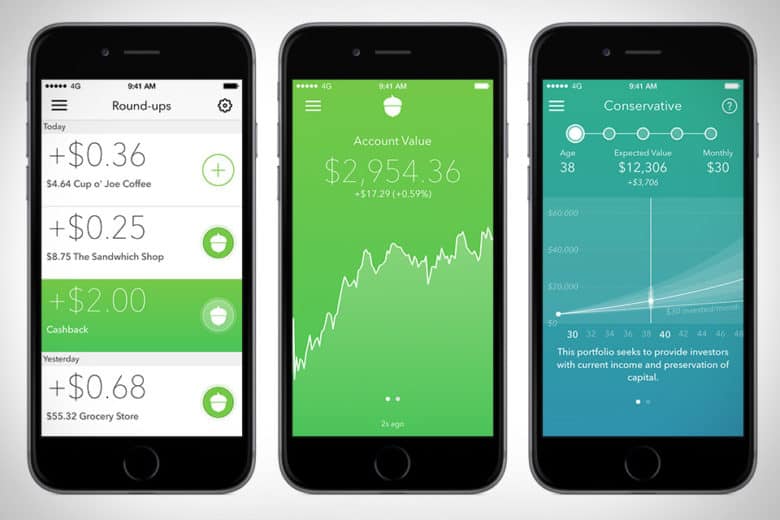
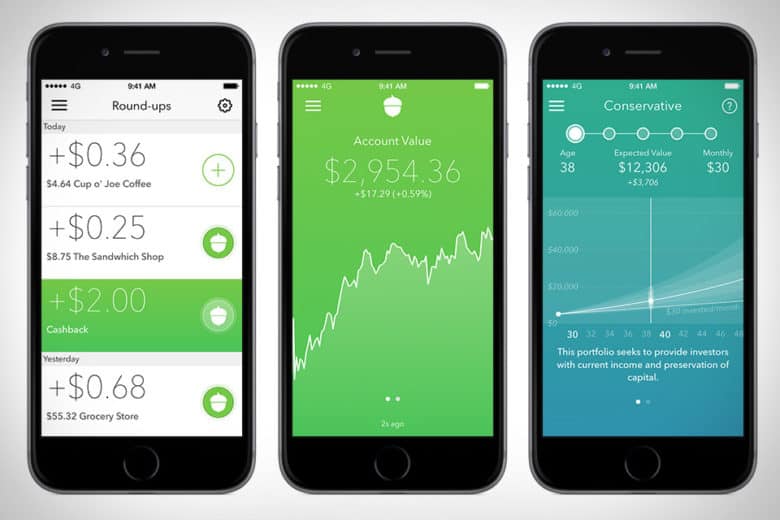
    To start investing with Acorns, you will need to link the application to your credit or debit card. Acorns will then round up all your purchases and move the change into your investment portfolio. This makes it one of the best apps to use, especially if you’re looking for a more hands-off investing type of approach but still want to make it your new habit.

    3. Public.Com
    Formerly known as Matador, Public also tops the list of the best stock investing apps you can find. It mixes social media with commission-free investing in creating a simple but unique platform that’s ideal for beginners.

    Public’s iOS and Android apps also help users to connect with other investors. Its developers came up with an ingenious idea to connect users with about 5,000 different securities. Another sweet deal with using the app is that you get a free stock of up to $50 if you refer a friend who signs up and starts trading.

    Public.com’s online trading app lowers the bar for beginners into the world of investing with no minimum balances needed and fractional shares available. After you’ve downloaded the app and opened an account, connect it to your bank account, and you should be set to start investing and trading.

    On the downside, more advanced investors who want to invest in cryptocurrencies or international stocks may miss out when using Public.com. But overall, this is an amazing online trading app for beginners who want to learn most, if not all, of the basics of online investments in a fun and intuitive way.

    4. Betterment
    Betterment is one of the world’s best Robo-advising platforms you can find today. The online investment guru manages and re-balances investors’ portfolios, making them stronger and more financially rewarding. Betterment is also one of the most user-friendly and easy-to-use online investment applications that can help users manage their taxable investments.

    To start investing with Betterment, you will need to answer a few questions about your financial goals, age, income, and risk tolerance. This information helps the application to evaluate you as an investor and the best investment experience with your goals. Additionally, Betterment has built-in financial guidance that’ helpful for anyone who’s still new to investing.

    It’s an excellent mobile application for both beginners and seasoned investors since it provides so much guidance to help all investors in different capacities.

    5. Webull
    Active traders who are looking for a mobile-first way to trade are better off trying Webull. This mobile app allows investors to trade ETFs, stock shares, and options to use. Webull also provides one of the simplest, bare-bone interfaces for smartphone apps. You won’t see several educational contents on the platform, but it’s still a leader when it comes to graphic analyses.

    Webull is an excellent choice, especially for investors who have some idea of what they’re doing. It also offers commission and fee-free trades for stocks, ETFs, shares, and options, making it one of the most desired options with a $0 minimum balance.

    Manage Your Stock Portfolio

    While worrying over daily fluctuations won’t do your portfolio much health, there’ll be times when you will need to check in on your investments.

    It’s always advisable that you revisit your portfolio several times a year to check if it’s still in line with your investment goals. Some few things to consider include:
    • If you are approaching retirement, it may be best to transfer some of your stock investments to more conservative fixed-income investments.
    • Pay attention to geographical diversification. It’s advisable to invest in international stocks as well to safeguard your portfolio. If possible, invest in stocks from different countries.
    • If your portfolio is heavily weighted in one industry or sector, consider buying stocks in a different industry to build more diversification.

    Limit Risks Through Diversification
    Diversification is the most popular way of managing risk exposure in the investment industry. Prudent investors always invest in stocks from different companies in different sectors, sometimes in different countries. They do this with the expectation that if a single bad event affects one stock, it doesn’t affect the rest. Diversification allows investors to recover from losses incurred from some stocks, thereby allowing investors to stay afloat.

    The first rule of trading is never to risk putting all your eggs in one basket. Also, never risk investing anything you’re not prepared to lose. This strategy is based more on the impact of margin trading. It means that you could potentially lose everything in a single trade if you’re not careful.

    Long-Term Investors Vs Short-Term Investors
    Knowing when to use short-term or long-term investments is a crucial part of growing wealth to help you reach your goals. Therefore, it’s essential that you learn all the strengths and weaknesses of short-term and long-term investments and which option is a better fit for your financial future. Here’s a quick brief on long-term investments and short-term investments.

    When to Consider Long-Term Investments
    Although some people put a lot of effort into short-term investments, getting to your goal of financial freedom isn’t a sprint, it’s a marathon. The earlier you start, the more you’ll be able to accumulate. The earlier you start, the more you can accumulate. And long-term investments help you to achieve this goal.

    Long-term investments are mostly assets like stocks and real estate. They are the investments that you plan on keeping for a while. This allows them to grow and allow your portfolio to grow as well since you know you won’t access them for a significant period.

    Times when it makes sense to consider long-term investments include:
    • When your retirement is 20+ years away
    • You want protection from inflation
    • You need a plan for 7 to 10 years in the future

    When to Consider Short-Term Investments
    In contrast, short-term investments are the investments you intend to use to meet your financial goals within shorter time frames. Often, they include assets like cash, bonds, and annuities. Some few scenarios where trying short-term investments make sense include:
    • You will need the money soon
    • You want a regular source of income

    The Bottom Line
    The information provided in this excerpt should help you start investing and working like a professional. One important note to keep in mind when investing is to never invest in anything that you don’t understand. Above all else, remember that it’s your money on the line. So, don’t be afraid to ask as many questions as you have to.

    The investment steps mentioned above should help you to stay empowered and confident, even as you start creating your retirement plan today.


  • Best Online Investment Apps! Start Earning Now

    Best Online Investment Apps! Start Earning Now

    Investing in the Stock Market can be daunting. There are a ton of moving parts and the big players all seem like Wall Street types. The good news is, the age of the smartphone has made investing super simple and easy. Where once you might have had to contact a broker to be your proxy on the exchange, you can now just use an app. There are a ton of options out there, though. How do you know which investment app is the best? Well, we’ve got our ten favorites for you to check out! 

    Bloomberg 

    Photo Credit: Bloomberg 

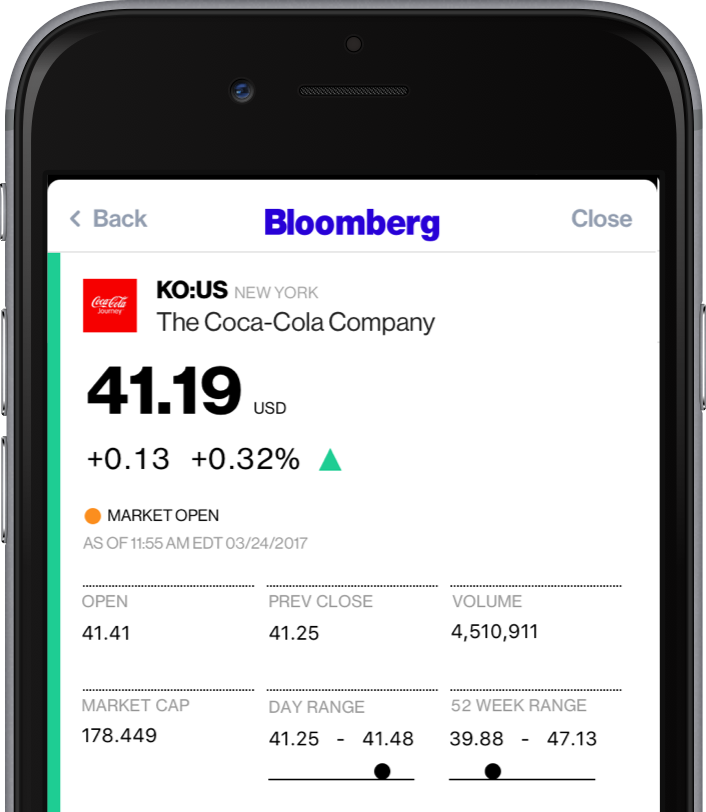
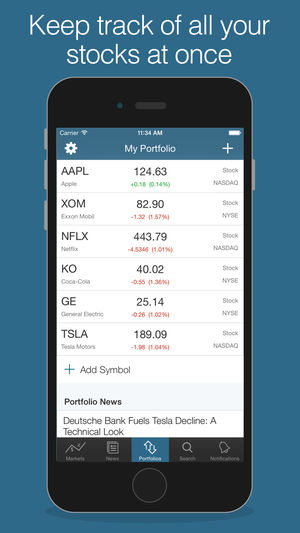
    A well-known name in money management, Bloomberg’s app is great for investing. Combining breaking money news and investing tips, Bloomberg has it all. The app even offers personalized news, so you can watch the companies you invest in.  

    If you’re as interested in the “why” of the stock market as you are in making money off of it, try Bloomberg. 

    Benzinga

    Photo Credit: iTunes 

    Benzinga is great for investors who want insatnt information. By opening the app, you get immediate stock quotes, no need for waiting or skimming over news you don’t want. Acting as something of a punchy investment app, Benzinga is good for those who want to forge their own way. It has social media options, too, letting you share trending stock info to sites like Twitter.  

    Benzinga can also give you push notifications when news relevant to your investments breaks. It also offers some premium features for those who want a more in-depth experience. If you get the subscription you access features like live analysts to answer questions and audio news. 

    CNBC

    Photo Credit: DownloadMyMobileApp.com 

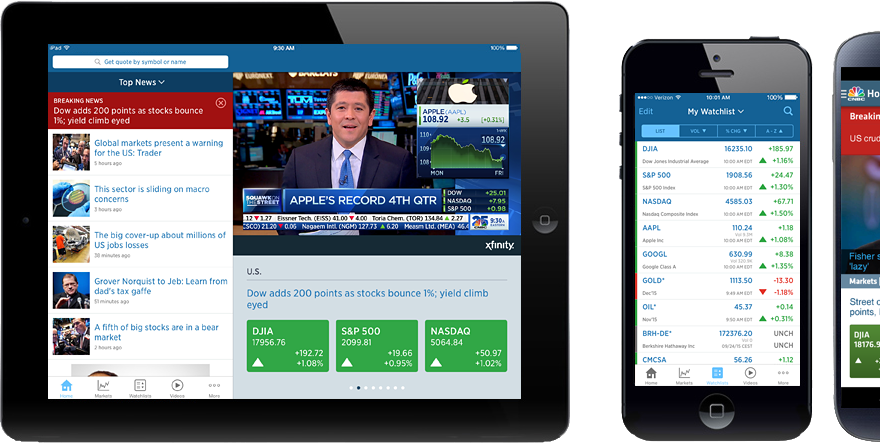
    CNBC is a great news app for those who want to see a little bit from every source. Their app is clean and user-friendly, presenting data in an immediate, digestible format. Many investors swear by the process of synthesizing news from as many sources as you can stand to read. CNBC’s app is a fantastic way to achieve such wide-ranging research without having to dig across the internet. A great resource for novices and veterans alike! 

    Fidelity Investments

    Photo Credit: iTunes 

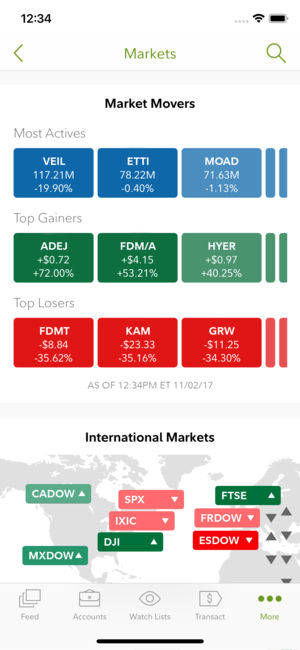
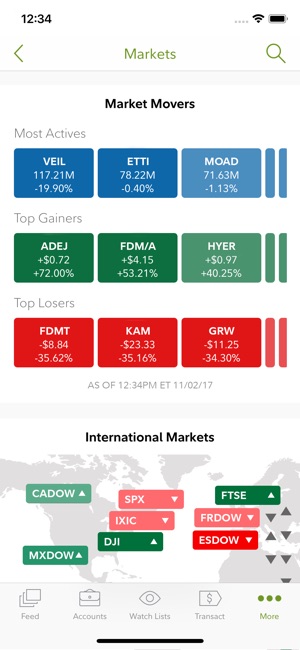
    Fidelity Investments’ app is great for more experienced investors looking to move to something more in-depth. The app offers in-depth charts and daily video coverage of market trends. It also offers notifications for when prices go above or below certain thresholds. It has a comprehensive news section and offers multiple money-management tools. This is a great choice for those who have become more adept in their online investing! 

    Motif Explorer

    Photo Credit: The Divided Ninja 

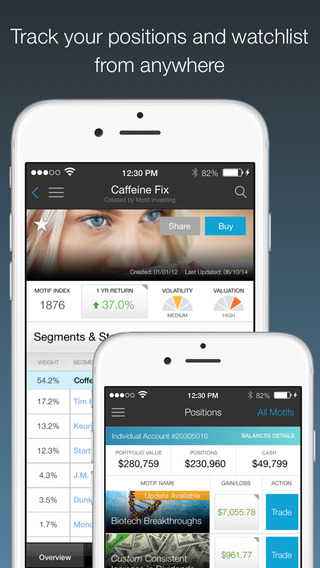
    Motif is a cool way to introduce the stock market to people who are curious about the exchange. The app’s creators track various world events to see which could cause the market to shift. Portfolios, or motifs, based on those observations are generated. For instance, they might have a profile on clean energy, and if you invest in that motif your money would be invested in various clean energy companies. The app works to find which motifs are trending upwards and help you invest accordingly.  

    While Motif Explorer isn’t the best for large, serious investing, it is interesting for newcomers. Consider this one if you’re interested in dipping your toe in investing. 

    TD Ameritrade 

    Photo Credit: TD Ameritrade 

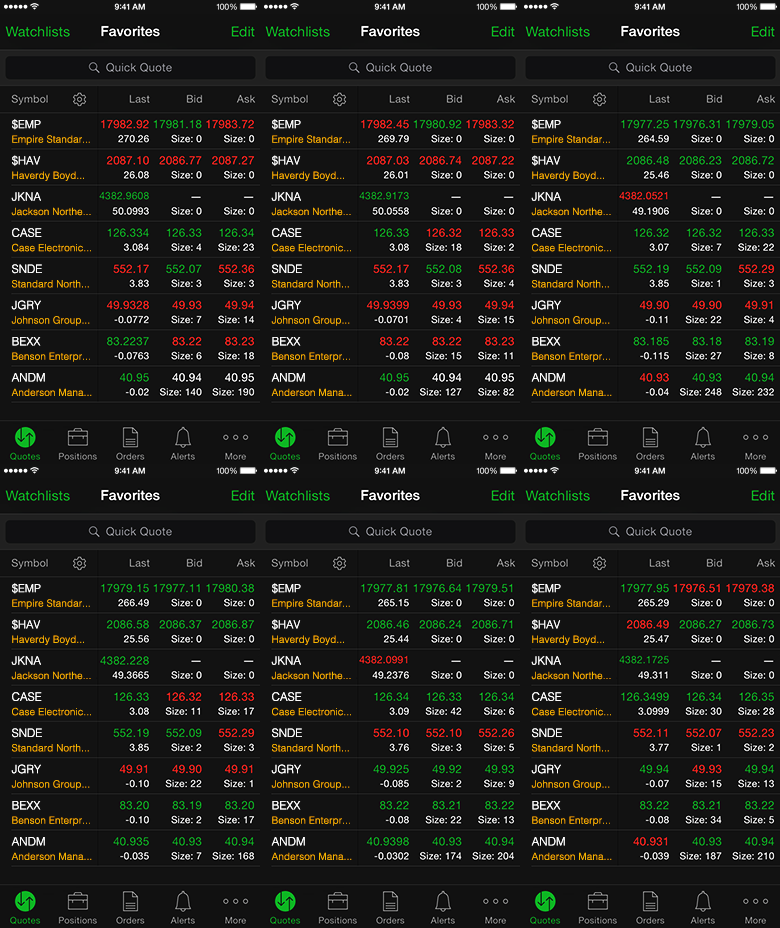
    This app gets a nod for being a great, bare-bones app with no frills. If you’re looking to not have your hand held and just start investing, check this one out. It offers real-time view of the stock exchange, mobile trading, fund exchange and other basic features.  

    Most notably, this app has a feature called Snapstock. This feature lets you use your phone camera to take a picture of a barcode. Then, the app pulls up the company that makes the product that barcode is attached to. That way, if you see an item in a store and think “this is going to be huge,” you can find them and invest on the fly from your phone. 

    Yahoo! Finance

    Photo Credit: Geeky Gadgets 

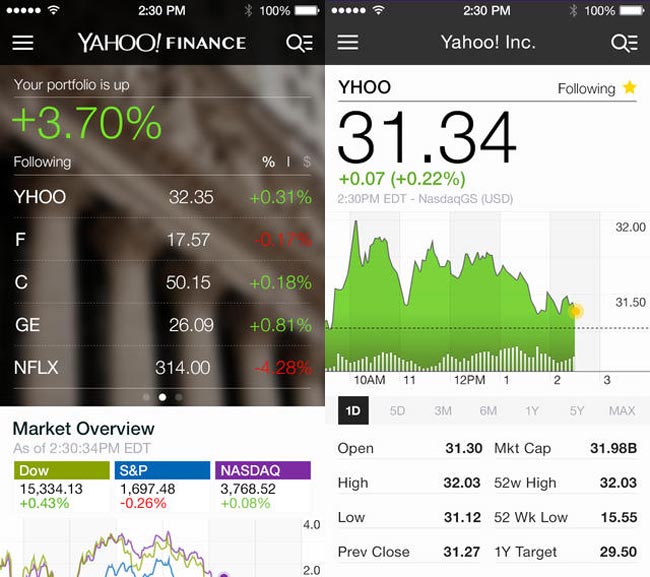
    Surely, you’ve heard of these guys? Jokes aside, Yahoo! Finance has a great app for beginner investors. The app has a gorgeous, clean design reminiscent of Apple’s native iPhone stocks app. The design is personalized to your investments and offers a great dashboard to see what stocks are trending. It also features news and trending stocks at a glance. All in all, this app is great for those just starting out who want to get their stock info at a glance.  

    Stock Market Simulator

    Photo Credit: APK-DI.com 

    This mock investment app is a stress-free simulator to show newbie investors the ropes. You start with $10,000 in virtual money with no value and can mock invest in an echo of the real stock market. The echo updates fifteen minutes behind the real exchange. While this isn’t meant to be a tool to predict actual investment trends, it is useful to show newcomers what the exchange looks like. It allows them to experiment without risking their actual money. 

    SigFig


    Photo Credit: Apptentive 

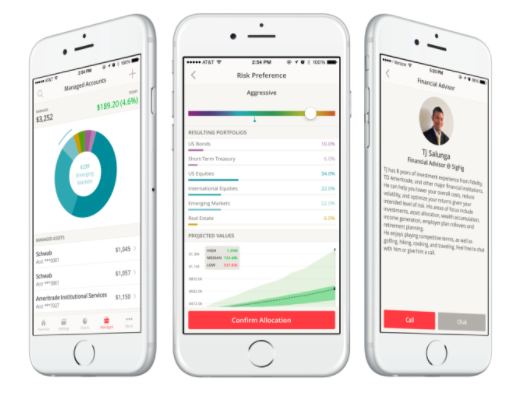
    This investment app is quite good for newcomers. SigFig offers advanced optimization tools for portfolios, helping you manage your money. You take a profile quiz to tell the app the ways you like to take risks with your money. You get a personalized investment plan, put money in the account, and off it goes. It’s like a digital broker! 

    The app also offers investment advice for first-time investors. The only downside is that it only shows you three years back of your investment, where most apps opt for five- or even ten-year retrospectives. That said, this is still an awesome choice for newcomers. 

    Our Favorite Beginner Investment App: Acorns

    Photo Credit: Cult of Mac 

    The Acorns app is pretty awesome. This investment app works by investing your loose change into a diversified portfolio. The idea is that you set it up with your credit or debit card, and then the app rounds up your regular purchases and invests the small amounts of money in accounts recommend by Harry Markowitz. Markowitz, for his part, has won a Nobel Prize for his work as an economist, so you know your money is in good hands. 

    Acorns is meant to be a “set it and forget it” service, in their COO Jeff Cruttenden’s own words. The service does have a small monthly fee, but as long as you keep small amounts of money in it, you probably won’t notice it. This service is great for those who’d like to invest but don’t know where to start.