As my old buddy Brad used to say, Its summer time and we’re living easy. I’m sure you all have great summers plans in place, with boats and beaches, golf, good friends, great times and noodle salad, but have you accessed what you are going to use for music during all this fun in sun? I didn’t think so and that is why I’m here, to tell you about the 5 best portable Bluetooth speakers you can take with you anywhere you go this summer. To make this list they will need a few requirement, for one they have to be IP water resistant. The second is they need to have full 360° sound.
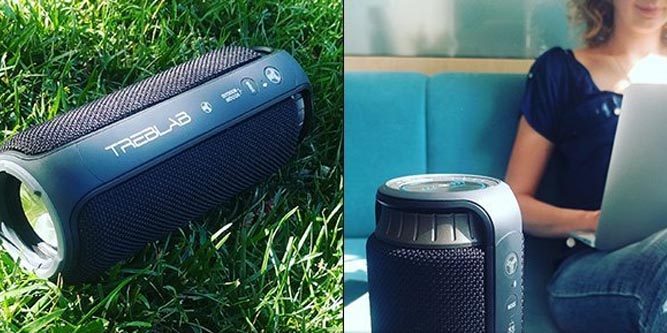
5. TREBLAB HD55
Wonderful sound, With HD55, you’ll feel as if you’re at a live concert, with clear high notes, deep bass and 360° true HD sound. This advanced Bluetooth speaker has the latest state-of-the-art double 12W drivers and double bass radiators. Great for the Office, traveling & late nite LA gangsta style pool parties. IT is waterproof with a rating IPX4. Amazon pricing of only $69.97
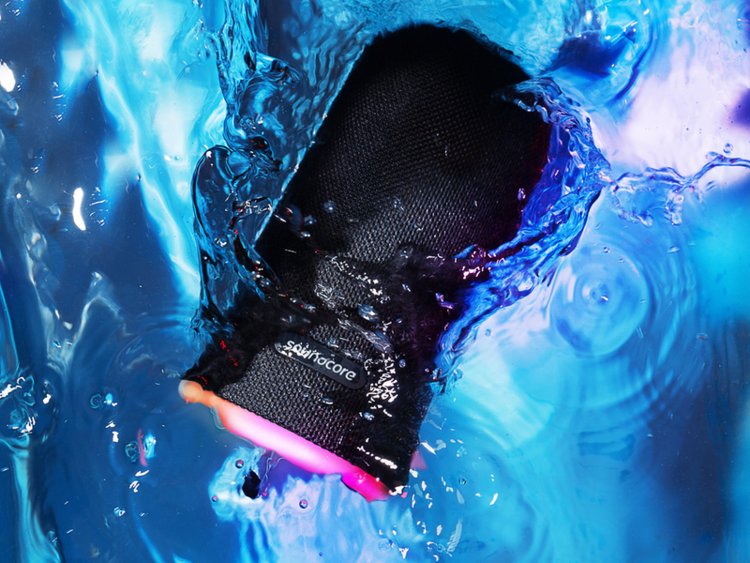
4. Soundcore Flare Portable Bluetooth 360° Speaker
Much like the HD55, the SoundCore Flare has the 360° and is IPX7 waterproof. This has great mid range sound, great acoustics and will keep the singing going on all night. It secured the number 4 position for one terrific reason, its $10 cheaper at $59.99.
3. JBL Xtreme 2 Portable Bluetooth Speakers
The JBL Xtreame is know for delivering earth-shaking powerful stereo sound. The speaker is armed with four drivers, two JBL Bass Radiators, a rechargeable 10,000mAh Li-ion battery supporting up to 15 hours of playtime. Its also IPX7 certified waterproof. At $299 it starts off our top 3 Portable Bluetooth Speakers for summer.
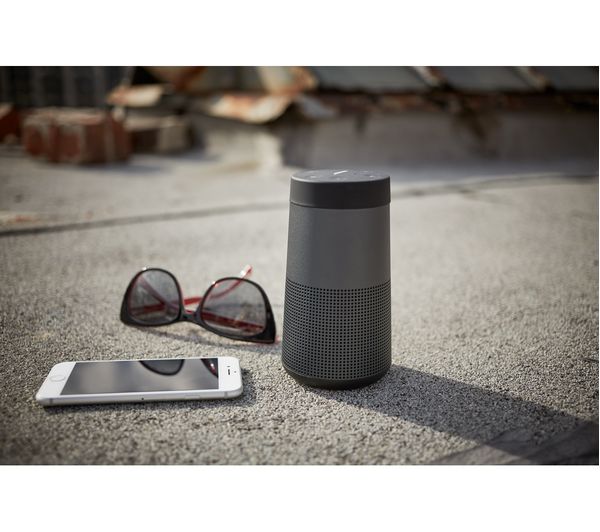
2. Bose SoundLink Revolve+
You can never go wrong with Bose. They have mastered commercial sound. And this is the best-performing portable speaker from Bose. It ultimately delivers Deep, loud, jaw-dropping sound with True 360-degree coverage. Ipx certified and fits beautifully in the golf cart. At $299 its a steal.
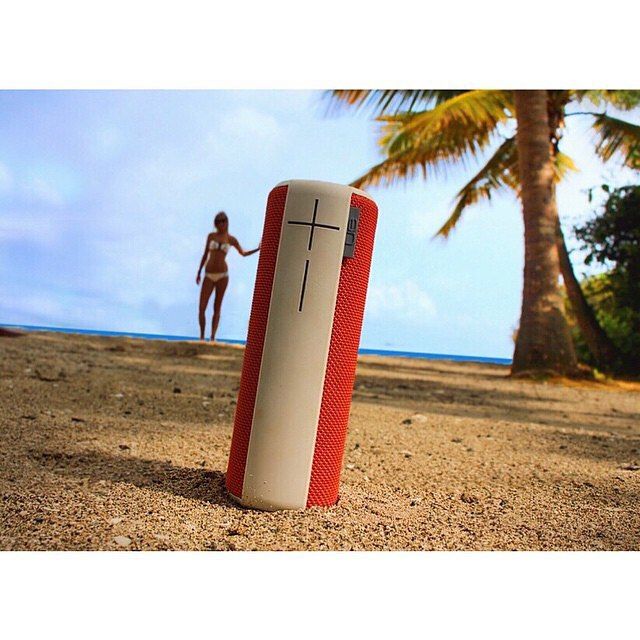
1. Ultimate Ears MEGABLAST
And the winner is…UE’s most powerful speaker with 360° intensely rich sound, stunning clarity, and heart-pounding bass. With up to 12 hours of battery, it brings your music to life wherever the summer leads you. With Amazon Alexa hands-free voice control you can now just ask Alexa to blast tunes from Spotify. It is waterproof and virtually indestructible: Never worry about going easy on it, your music will always be on point. The speaker is IP67 rated and can be immersed in water for up to 30 minutes. Yes I tried it. It is by far the loudest on this list, the most durable and at $190 the best value Portable Bluetooth Speakers for your summertime listening pleasure.
The Final Thought
This is going to be the best sounding summer ever. Get me my speedos and a REM playlist!!
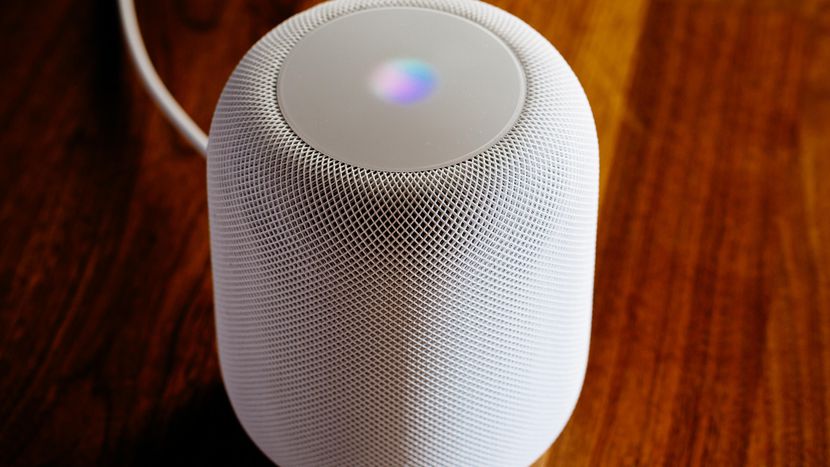
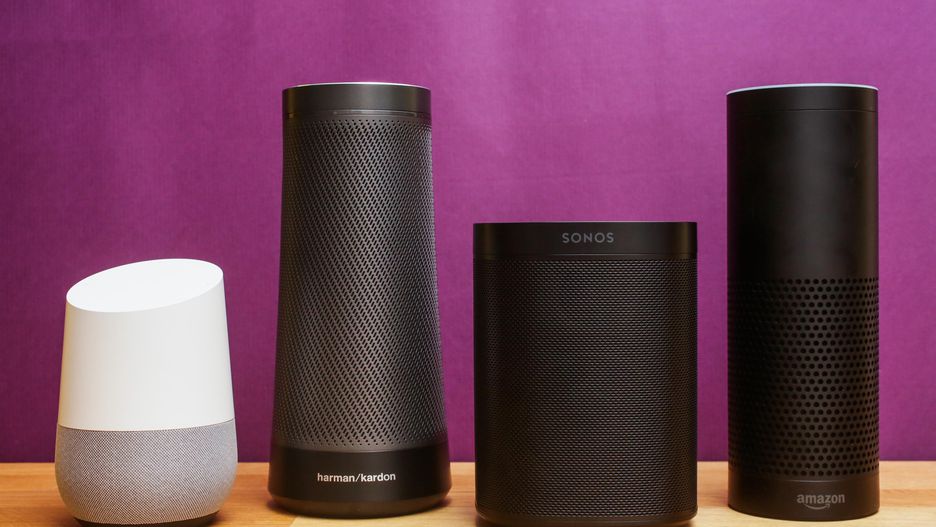
Apple’s attempts to break into the smart speaker market have been unimpressive so far. While Amazon and Google rule the roost, Apple lags behind the competition with the HomePod. What are some ways they could pull the nose up on this crashing plane? Well, here’s hoping someone at Apple is reading this, because we’ve got the answers.
Third Parties
Apple’s home platform, HomeKit, isn’t third-party friendly. Third party hardware manufacturers interested in pairing with HomeKit had use the MFi Chip, a proprietary Apple piece of hardware. While Apple has since reversed the MFi Chip requirement, it put a black spot on their relationship with third parties. Google and Amazon, by contrast, had no such restrictions, and thus they have a wider base of support from third parties. Apple needs to prioritize winning back those third-party functionalities.
Further, Apple doesn’t let anyone outside of their main R&D department make functionality for Siri. While Amazon has allowed tons of third-party developers to introduce new skills to Alexa, Apple has done no such thing for Siri. And it shows: Alexa is amazing! She has so many skills, answers to so many things! Siri, uh, doesn’t. Apple could introduce a platform for developers to submit new Siri skills that they could carefully regulate. This would allow their platform to be more desirable to end users without flooding the software with tons of useless commands.
Music Streaming Functionality
This one is a sore spot for many. The HomePod is largely marketed as a speaker first and smart device second. So why in the world is it so hard to use anything other than Apple Music on the device? You can only use voice commands from the device to play Apple-approved music sources. Apple Music, Beats 1 Radio and the like are white-listed. Every other streaming service has to be activated from the phone via AirPlay 2.
Again, this is disappointing when compared to the competition. Both Google and Amazon smart speakers allow voice commands to bring up Spotify, YouTube and the like. If Apple wants their speaker to be taken seriously as a music-first device, their design needs to be music-first. This one’s a no-brainer.
HomePod: About That Price…
Both Amazon and Google offer $50 entry-level speakers. The HomePod is three hundred and fifty freaking dollars. $350. That is a positively bananas price point, and likely the main reason the speaker is struggling. Seriously, where is Apple’s budget speaker? HomePod Mini, or HomePod Nano, whatever. They’d think of some cute name.
That’s really not even to say that the HomePod, as it stands, itsn’t worth $350. It may well be worth that. But Google and Amazon offering comparable technology for three hundred less dollars makes the premium HomePod a really, really tough sell.
Well, there you have it. I hope Apple took note, because I’d love to see them be competitive in this field. Competition, after all, is great for the end consumers (hey, that’s us)!
When you think of self-driving cars, you’re likely thinking of hopping in a normal car and telling it where you want to go. The car would then take off, using lidar to navigate to where you want to be. And this is certainly an eventuality that will come to pass. However, it is not the only thing self-driving tech will enable. In fact, it’s not even the most exciting change that the technology will bring about. The technology will be redefining taxis, busses and even deliveries in the very near future.
Self-Driving Cars Making Deliveries
Many companies, like Nuro, have been looking into automated delivery vehicles. Nuro’s particular automated car is a comparatively small when looking at it next to a car. It has room only for cargo, not intended to transport humans. This type of delivery vehicles could revolutionize delivery. Without need for paying a human driver, or paying for the insurance on a human, delivery fees could plummet.
Nuro themselves speculate that their technology could make delivery fees for things like groceries as low as a dollar. This could lead to a dramatic reduction of the number of cars on the road, as people wouldn’t have to drive around town to shop. Shopping could be handled predominately from smart phone interfaces. This would work to make roads safer, and deliveries more convenient.
Is it a Taxi? A Bus? Is it Both?
Companies like Uber and Lyft have been operating a quasi-taxi-bus hybrid by way of their Pool and Line services, respectively. Waymo is developing a taxi-like service that will be driverless, looking like a conventional ride-hailing app but with no human operator. Drive.ai is developing a driverless service that would look like Uber Pool. Users would be able to hail a driverless shuttle and share it with other users with the same destination.
These advances could lead to much-reduced fare prices, making taxi and bus services much more affordable for the average person. This could also lead to even safer, and less congested, roads. Driverless cars could coordinate their maneuvers to reduce traffic slowdown, and pooled services would lead to an overall reduction of cars on the road. Scenes of clogged intersates, like those found in Los Angeles, could well become a thing of the past.
Ramifactions
A transportation revolution of this scale is certainly some time off. For the time being, taxi drivers, pizza delivery drivers and truckers are all safe to keep their jobs. However, in the next few years, there will likely be less demand for human drivers in those fields. Instead, the job market for software developers who update and maintain the driverless scrips would boom. Technicians skilled in repairing and maintaining such vehicles would be in more demand, as well.
While the loss of jobs from automation is certainly a cause for concern, it won’t stop progress. Horseshoe makers and carriage drivers didn’t stop the advent of the automobile. Will driverless technology be as big a revolution as the automobile itself? We’ll find out very soon.
Nintendo and the Pokemon Company have finally unveiled some details for their new Pokemon games. Pokemon Let’s Go! Pikachu and Pokemon Let’s Go! Eevee are slated for release on Nintendo Switch on November 16th, 2018. What are the details? What can we expect to see? And does it live up to the hype?
A New Look for an Old Adventure
For a certain generation, the first few Pokemon games mean a lot. If you’re like me, you have fond memories of Pikachu and the gang running around on your GameBoy screen. Gamers in that camp will be delighted to hear that this new game is a reimagining of Yellow Version, the enhanced GameBoy Color port of the original Red and Blue.
Yellow version is fondly remembered for introducing elements from the anime, such as the starter being Pikachu. The new games are set to feature the original 151 Pokemon and the original setting, the Kanto region.
Let’s Go!
The new games take a cue from the mega-popular Pokemon Go app. Let’s Go! seems to adapt the capture mechanic from the smartphone entry. It seems the new Switch games are set to appeal to the more casual crowd pulled in by the surprise success of Go.
Additionally, it seems random encounters in the wild will not be featured in this game. Instead, encounters will be visible in the overworld. Battling wild monsters also seems to be skipping this entry, much like the smartphone-friendly Go. However, the game does feature trainer battles! Though at this time it’s unclear how big a role training and battling will play.
Pokeball Plus
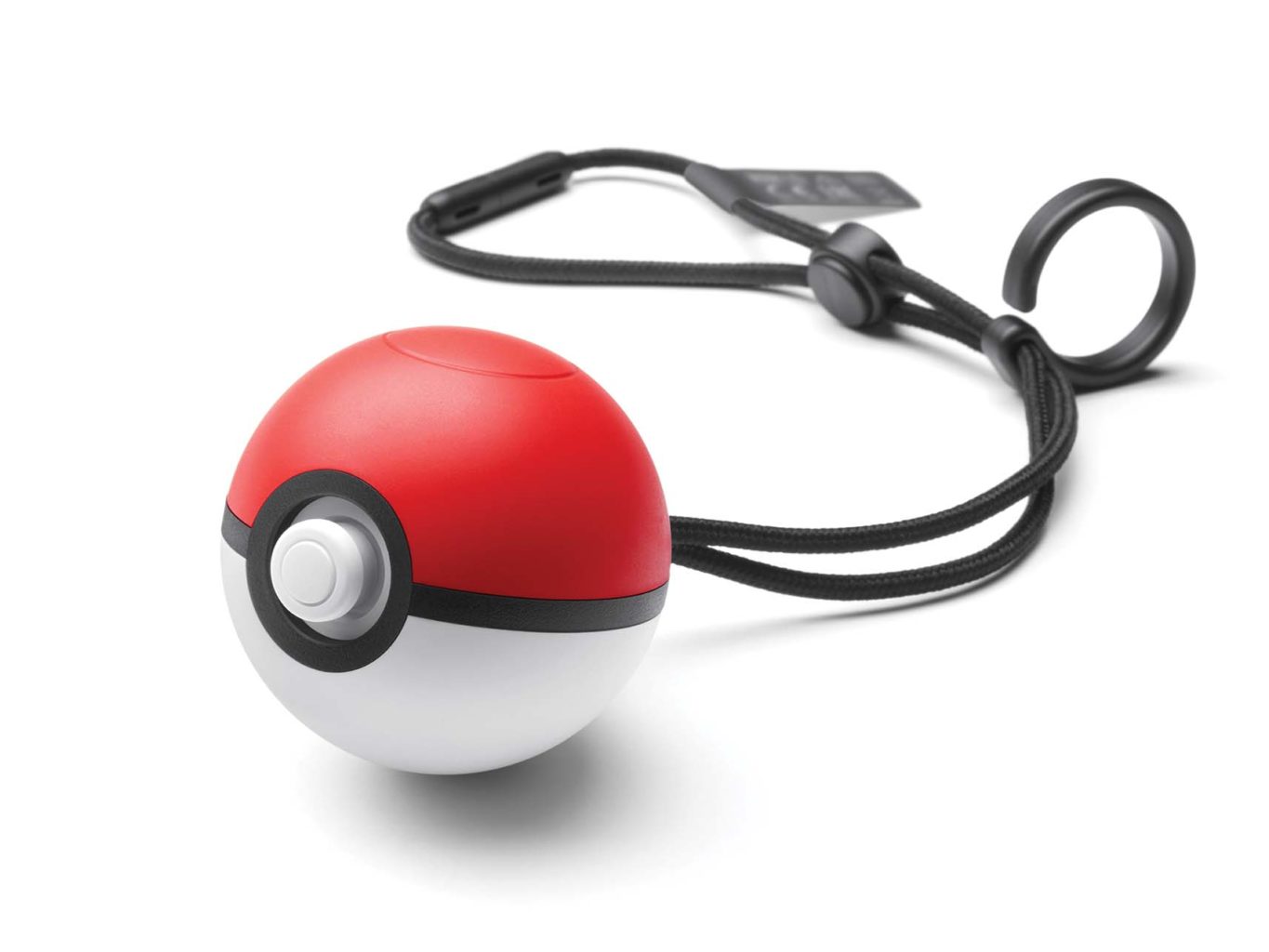
Nintendo also announced a new controller for the Switch called the Pokeball Plus. The ball-shaped controller is adorable, and also offers new functionality for Let’s Go! The Pokeball Plus allows you to store a Pokemon from the console game and take it for a stroll with you. This functionality echoes the Pokewalker from HeartGold and SoulSilver.
What’s more, Let’s Go! promises connectivity with Pokemon Go, allowing you to transfer monsters from your phone to your Switch. Nintendo seems to be viewing these games as onboarding for smartphone-only players. Those who were introduced to the series via Go will have the chance to transfer their faovrite Pokes to their consoles. This could entice them to check out next year’s core entry. What’s that? Oh yeah, there’s more.
More Pokemon to Come
The best news of all? This isn’t the only Pokemon coming to Switch. While Let’s Go! is aiming to appeal to the more casual crowd, Nintendo promises a new “core” entry in the series in 2019. In the meantime, those craving a fun adventure with their favorite Pocket Monsters have a treat in store for them!
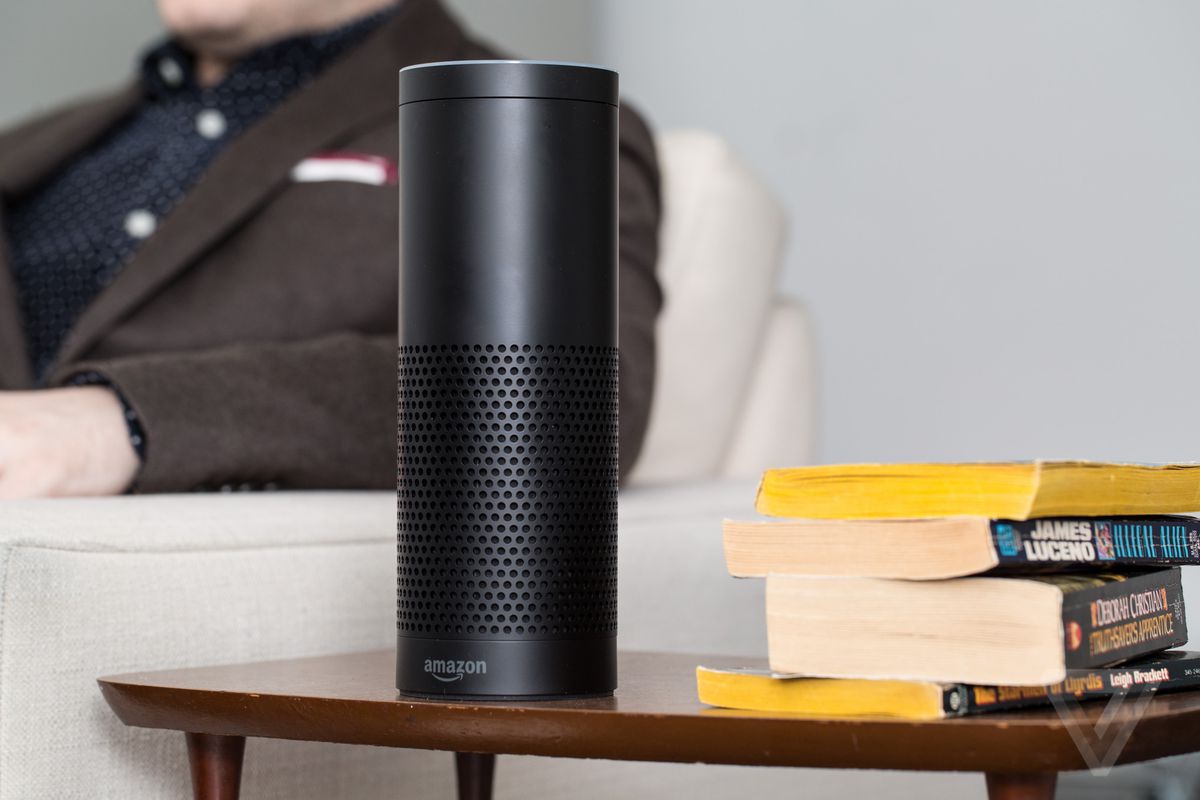
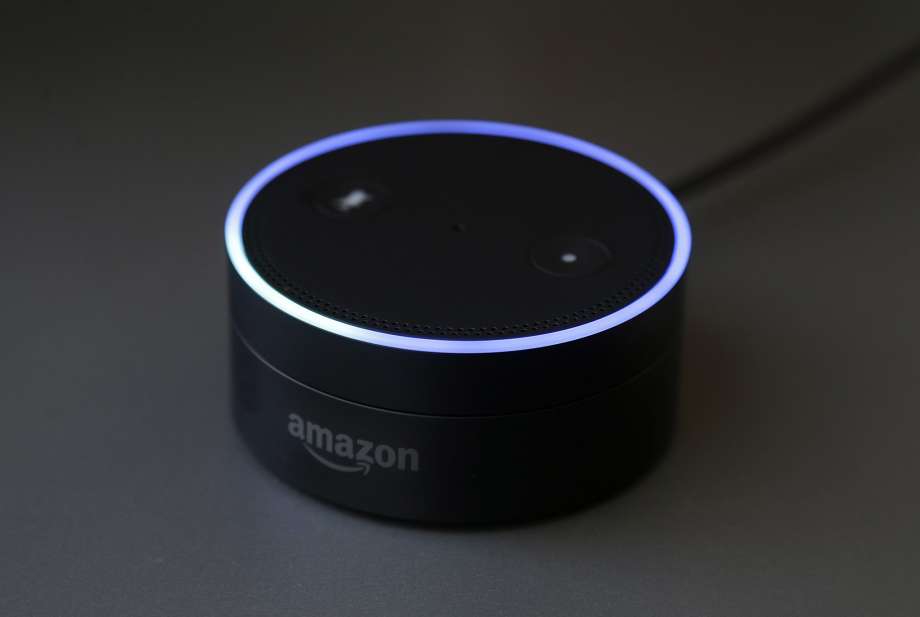
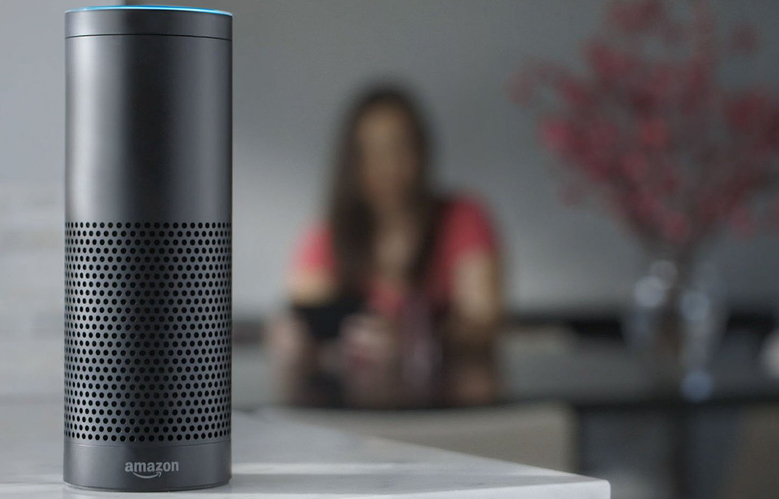
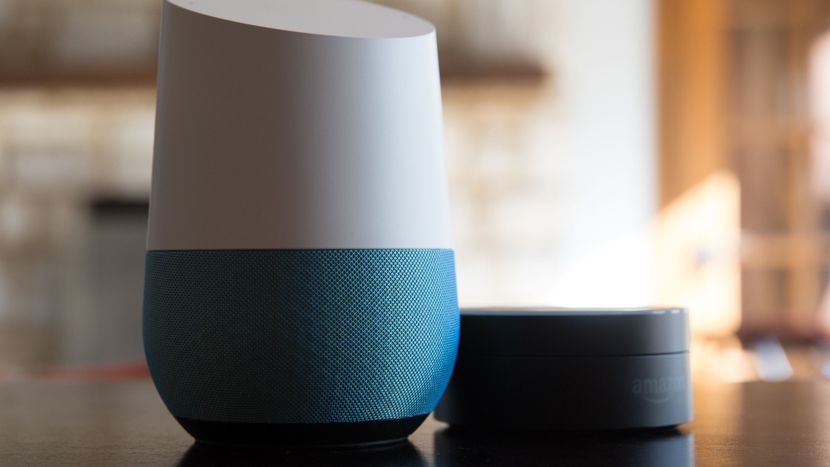
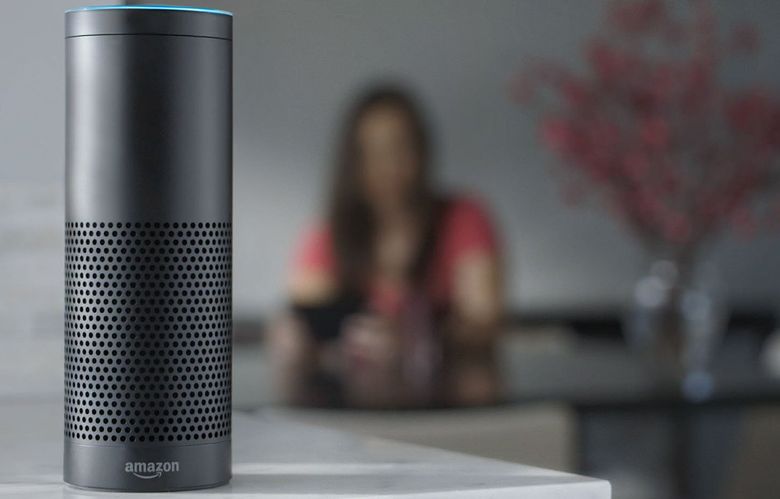
Your smart speaker is an incredibly handy piece of technology. It helps organize your life, streamline your household activities and even helps you shop online. But what are the security risks posed by having an always-on mic in your living room? Who’s listening to your recorded audio? According to a recent report from Seattle news station KIRO 7, these concerns are not mere conjecture.
A Portland woman identified as ‘Danielle’ told the Seattle news station that her Amazon Echo sent a recording of a private conversation to a contact. The conversation was utterly harmless, apparently a discussion between Danielle and her husband regarding hardwood floors. However, the contact who was sent the audio files immediately contacted Danielle and told her to disable her Alexa-enabled device immediately. The contact feared that Danielle had been hacked and was in danger of having her information stolen.
Danielle immediately contacted Amazon to ask for answers. How did this happen? Were they aware the Echo was doing this? The representative that Danielle reached found the relevant logs, confirming what had happened. He apologized profusely, according to Danielle, as the situation was unbelievably unlikely. Apparently, the Echo device overheard the conversation happening in the other room. Some words in the conversation made the device think it was being asked to send a message. After mistaking background noise for a confirmation, it sent the overheard conversation to the contact.
Wired Magazine described the ordeal as an “Echo butt-dial,” a complete fluke. Amazon claimed that they will use the data from this incident to tighten Alexa’s recognition protocols and make this scenario more unlikely. However, this individual scenario isn’t the only smart speaker security concern: if they’re always listening, how can they be secure? What are some of the other concerns with these devices?
The first issue, and most pressing in regard to Danielle’s case, is that of background sounds. Smart Speakers have to be listening for their trigger phrases all the time. If they don’t, they literally don’t work. This represents a serious security concern, though, as Danielle found out. What if the speaker mishears you and sends private conversations to people who aren’t supposed to hear them? What if a malicious hacker accesses your device and listens in to find out when you’re home? Would Amazon bear responsibility for such a breach?
The answers are currently unclear. While such situations are mostly hypothetical, Danielle’s case shows that they are potentially possible.
If your smart device is always listening, who can hear what it records? Google is well-known for creating complicated advertising profiles for users. Smart speakers are surely a part of this. Listening for conversations about buying new hardwood floors, for instance, could lead to targeted ads on your favorite websites for floor installation. This alone seems predatory; who would invite a large ad agency into their life to gather valuable data about their spending habits?
This is even before mentioning the hacker issue again. If a malicious hacker were to access Google or Amazon’s user profiles obtained via Smart Speaker, they would have unprecedented data about potential identity theft targets.
If Google or Amazon are listening in, what kind of risk are users at for law enforcement listening in? The NSA’s wiretapping is well-known and, surprisingly, well-documented. Suspected criminals with smart speakers may have their homes bugged voluntarily. Would law enforcement need a warrant to collect audio from these devices? Would they need a court order to obtain user profile information from Google?
If law enforcement begins pursuing smart speaker information as a common means of information-gathering, the private lives of users could be at risk. Everyone had to read 1984 in school right? Yeah, this would be the first step to something like that. No thanks.
Speaking of access to your personal info, there’s also the issue of just how long Google and Amazon store this information. Thankfully, you can delete your audio request history from your user profile. However, you can’t do anything about the data stored on Google and Amazon’s servers about you.
In fact, even Apple’s Siri stores data you obtain through it and give it. Apple has confirmed that raw audio collected through Siri is stored for 18 months! That’s kind of ridiculous! The issues of law enforcement accessing this info, lawfully or otherwise, are further exacerbated by this data’s inaccessibility to the user who created it.
Finally, there’s the issue of someone else using your speaker. The main use for Alexa, as far as Amazon is concerned, is as a storefront. Ordering through Alexa is purposefully easy and painless. You just tell her to order you things and she does it, no questions asked. So, imagine, if you will, that your home is broken into and your Echo is stolen. The criminal then orders a ton of stuff with your credit card. Are you on the hook for that money?
While that scenario is a bit extreme, there are more conventional ways that Alexa’s shopping functions can be used against you. For one, if you have children, they could access your Alexa and order themselves a new tablet or gaming console, spending a ton of your money without telling you. Your friends could try to play a prank on you by ordering embarrassing items with your money. Not that that’s happened to this writer…
All this doom and gloom begs the question, then: How do you protect yourself from these potential data breaches? Well, one easy way, of course, is to simply not have a smart speaker. Or, if you do have one, sell it to someone else and use the money to buy a VPN subscription. No? Alright, alright, real advice, then.
Keep your smart speaker in a room where it’ll overhear as little as possible. If you can, keep it in a room with a closed door. The less it overhears, the better. Aside from that, just be careful what you say around it. Try to keep conversations around the device light, don’t talk about sensitive information. Another good security measure would be to not pair any of your debit or credit cards to the speaker. While it may be less convenient, it’s much more secure.
Hopefully these concerns will be addressed with future updates to the technology. Smart speakers are very handy, convenient devices. Many users have come to depend on the features they offer. It seems as though the companies that make them are at least nominally dedicated to making them secure. While only time will tell what the future hold for the contentious smart speaker technology, stories like Danielle’s serve as reminders: trust no soulless machine with your personal information. Even better: trust no soulless corporation.
The European Union provision known as General Data Protection Regulation went into effect on May 25th, 2018. While it may seem as though this would only impact Europe, it actually will have some ramifications for American companies, too. Any companies with European customers will have to be compliant with the GDPR from May 25th on. This means even companies like Facebook will have to comply with the plan.
What Does GDPR Ask of Businesses?
The GDPR asks a few things. The first is that European customers can ask to see what data a business has collected from them at any time, and that information must be provided. The second is that said data can be expunged at a customer’s request at any time. These protections are completely reasonable on the behalf of a customer, but many businesses may be resistant to such wide-reaching protections.
What Penalties Do Businesses Face by Not Complying?
This is the kicker: a business that fails to comply with GDPR is subject to forfeiting four percent of their annual revenue to the EU. While that might not sound like a lot, a company like Facebook or Amazon rakes in millions and millions of dollars every year. Even four percent of that is a small fortune. What’s more, it seems unlike the US Government would do anything to protect businesses found in violation of these rules. It seems only fair, of course, that a business with European customers follow European guidelines.
What This Means for Americans
Since these companies will have to implement this functionality if they wish to remain compliant, this will likely result in increased data protections for American customers, too. Americans currently have no such protections on the books, which is unfortunate, given the state of cyber security. Breaches like Cambridge Analytica and the Target hack have soured many Americans on large companies’ security protocols.
Hopefully legislation like this is on its way in America, too. Increased protections for the data of users is hardly a bad thing for anyone. Companies would be wise to self-regulate in this regard in the meantime. However, since no guarantees of such altruism are forthcoming, legislation is the next logical step. With luck, we’ll see such legislation follow suit in the US.
The long-running and high-profile court case between Samsung and Apple has finally wound down. The verdict? Samsung is to pay $539 million to Apple for infringed patents. That’s a lot of money, but not quite the billion dollars Apple claimed it was owed. The final number is, however, markedly higher than Samsung’s conservative estimate of $28 million in damages owed to Apple. What will this decision mean in the long run with regards to smartphone design?
Apple: Design First
Apple fought tooth and nail in this suit. The company has always maintained that they are a design-first firm. To that end, they were adamant in their assertion that Samsung’s infringement of their design patents constituted significant damages. The nitty-gritty of the case got pretty obscure, but here’s the broad strokes. Apple had patents for a rectangular-face, round-cornered smart phone (with and without bezels.) They also had a patent of a colorful grid of apps.
Samsung’s phones sold between 2010 and 2011, Apple argued, infringed on these patents. The courts found in Apple’s favor, but things didn’t end there. The issue came down to the difference between the individual phone components versus the phone as a whole. Apple claimed that Samsung owed damaged based on the sales of each entire phone they sold. Samsung, however, claimed that they only owed damages on the components Apple had patents for.
Samsung’s Point of View
Samsung argued that Apple only had patents on certain aspects of the phone designs they had sold in the timeframe of 2010-2011. They felt as though the damages they would need to pay should reflect this, as well as deducting the cost of business for marketing and designing said phones. While their points were well-made in some respects the jury found them unconvincing.
The jury found that the display screen couldn’t be considered a separate entity from the phone. How could it? The bulk of the smart phone is its screen, and the screen hardly works without the phone components. If one were to disassemble a smart phone, they would have nothing of real practical use. Samsung’s argument would work better in a case with bigger, more distinct components. The screen, however, was found to be an integral part of the phone.
What This Means for Smartphone Design
The huge fine slapped on Samsung will certainly give manufacturers pause with regards to smartphone design. Apple’s patents are somewhat broad, though in some ways they can be seen as fair. Apple did kick off the modern smartphone, after all, so isn’t it only fair they hold these patents? The other side of that coin, of course, is a concern for monopolization. If Apple can defend a patent this broad in court, smaller competitors may well be swallowed whole by them.
Samsung will feel the sting of this ruling, but they won’t be going away anytime soon. The Korean tech giant is worth billions, and they can afford to go toe-to-toe with Apple in court. Smaller underdogs wouldn’t stand a chance, though. This case has left an odd taste in the mouths of onlookers. Many are happy to see creative design defended by a federal court. Many of those same people are also wary of a giant like Apple tightening its chokehold on the smartphone market.
Beau’s App series. Each week, I install whatever is the No. 1 bestselling app on the iOS or Android store and review it, to save you the effort in case it’s total waste of life. This week a game called Jurassic World Alive is not in the top spot but Im taking it on anyways. Why isn’t it No. 1? It’s so new its just out of beta and instantly the Alpha of AR games. I could wait a week, but Im way too excited. Also because it’s free, because it just came out for phones, and because it’s really cool.
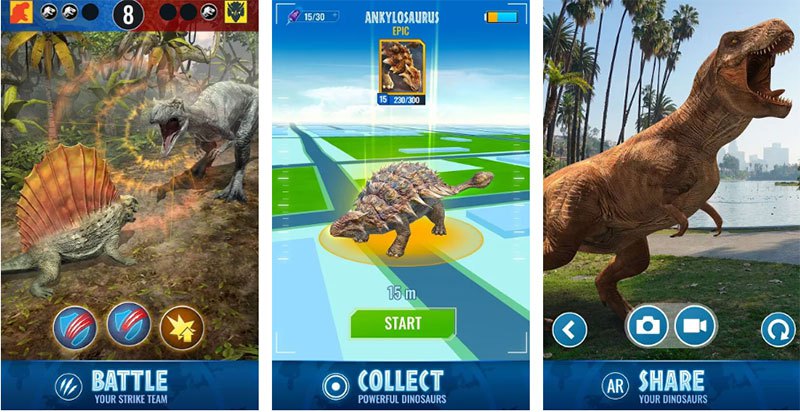
In the key of Pokemon Go, Jurassic World Alive is the AR game we have been waiting for. This game is set to explode in the same way Pokemon Go took over the summer of 2016. Alive is the latest franchise to try their hand on the Pokémon Go formula. Yes, we finally we get dinosaurs unleashed around our local neighborhood.
The Dinosaur Hunt
Jurassic World Alive puts players in the role of a new recruit in the Dinosaur Protection Group (DPG). Players are tasked with saving dinosaurs from another extinction by tracking them, collecting DNA samples and creating new hybrid species in a lab. Those man-made dinosaurs can be assembled into a team and fight in player-versus-player arena battles, which kind of seems counterproductive to the whole dinosaur protection thing.
You walk around the real world to “fly” a drone and collect dinosaur DNA from the terrible, augmented reality thunder-lizards that’ve infested your neighborhood (think: capturing a creature in Go); create your own hybrid creatures; battle your dino “strike team” against other players and, well, probably drain your smartphone’s battery very quickly in the process.
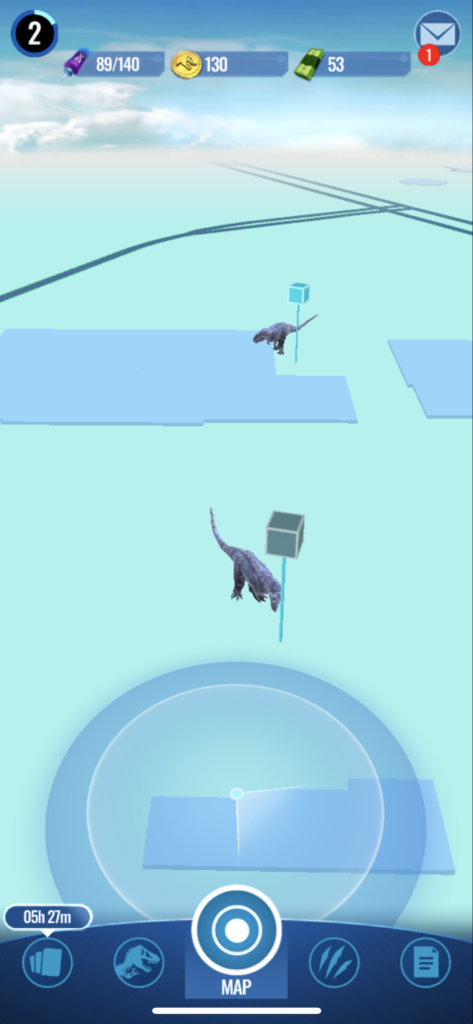
Claire, the same character from the Jurassic World movie series, introduces you to the basic concept of the game. Dinosaurs will pop up on your screen, once you’re in range you can click on it, and then launch and pilot a drone to collect DNA samples from the dinosaur so you can create it yourself in the lab. You can only create a specific dinosaur type once you’ve collected the required amount of DNA from that species, which will often require walking around your neighborhood to find more of that dinosaur.
Jurassic World Alive Map and Advantages
Dinosaurs smashed with Pokemon Go is an accurate summation rather than a reductive statement. The map is almost the same but with less out of the way stops. Jurassic World Alive keeps its drop-boxes close to the road and at stop lights making it much more convenient to get to the walking back behind the church. There also happens to be one at the end of my drive way so that is also cool.
The Drone is a little harder then just throwing a pokeball. you have to launch a dart multiple times to a small target on the reptile. The closer you get to bulls-eye the more DNA points you accrue to unlocking that dinosaur. You have a set amount of time to pull as many DNA points as you can, my max is 60 so far.
The Final Thought
Ive been waiting for a less kiddy Pokemon Go game. I loved they hype, the comradery and community the first month of Pokemon go brought us. Im hoping we get close to that magic moment with this game as well. Kids and Adult gathered around community centers, parks and churches trying to find another Eevee, it was a glorious summer. So lets all download this and go on a hunt together, get some exercise and mutate some dinosaurs into monstrocitys.
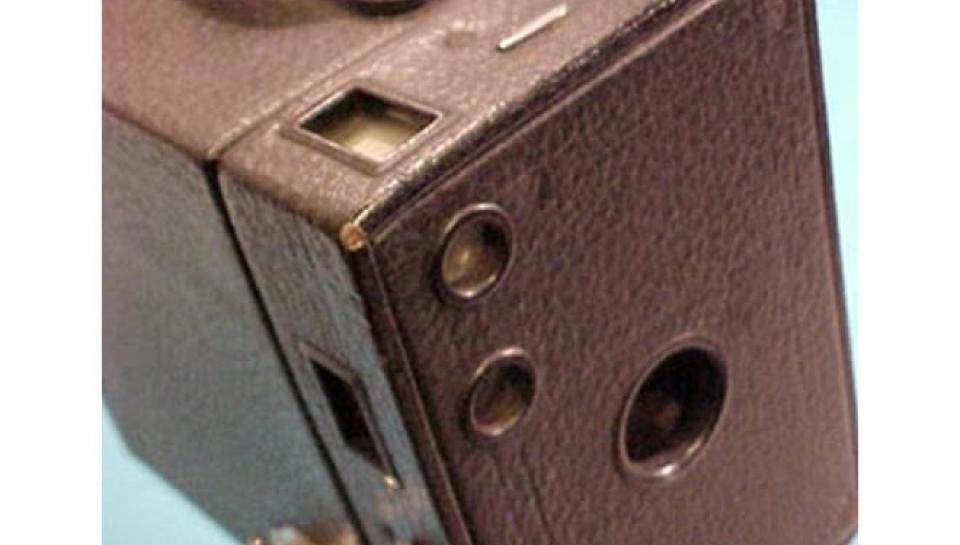
I like to take a look at where I’ve been to evaluate where Im going. Technology is cyclical after all… wait no its not. That said I still like all the feels that come rushing back like a flood of nostalgia every time I get my hand on the tech I grew up with. Im going to go back periodically and take a looking at the stuff that used to blow our hair back and get our minds rolling. Some of these device blew up and changed the world, some where ahead of their time and some just fell flat and became colossal failures. Today I’ve got my hands on the old and original Kodak Brownie Camera.
The Original
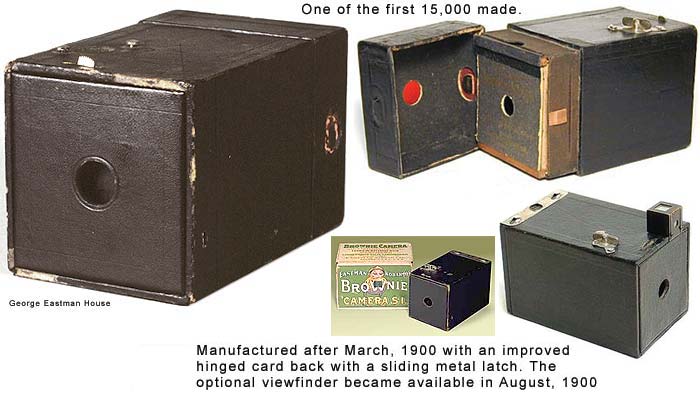
IF you have ever taken a real photography class, you know the best way to teach someone how a camera works is to have them make there own Kodak Brownie Camera. Kodak Marketed toward there camera to the turn of the century children. They were issues and carried by soldiers. At the hefty 1900’s price tag of $1 (about $29 today) they were affordable to everyone. Its a small, brown leatherette and cardboard camera and introduced the term “snapshot” through its ease of use and low cost. it was introduced in February 1900, the Brownie took cameras off tripods and put them into everyday use. For Kodak, the low-cost shooter was the hook that allowed the company to reel in money through film sales. And for the rest of the world, it helped captured countless moments and shape civilization’s relationship to images.
The first model of the camera was invented by Frank A. Brownell. The name comes from the brownies in popular Palmer Cox cartoons. Consumers responded, and over 150,000 Brownie cameras were shipped in the first year of production. Over the years it was extremely popular and many versions of it existed. There where many models over the years with feature and functionality improvements. My personal favorit was the Beau Brownie..
Beau Brownie
The Beau Brownie was a new version of the Brownie sold from 1930 to 1933. They had very little technical variation from the immensely popular Brownie cameras. With the only one big technical difference being the introduction of a new doublet lens, allowing the same picture to be projected on a film plate over a shorter distance and this made the Beau Brownies nearly 2″ shorter than their conventional counterparts. With an updated Art Deco design with an enameled two-tone front plate, it was a stunning example of period tech. It was produced in in five color combinations: black and burgundy, brown and tan, two-tone blue, two-tone green, and two-tone rose.
Basic Operation
The Brownie operates under the following sequence of events:
A shutter in the front of the camera is opened allowing light to pass through the lens. This light is reflected from the object being photographed.
As the light passes through the lens it forms an image of the object being photographed. As it continues through the lens, this image is inverted (turned upside-down).
The lens projects the inverted image onto light-sensitive film at the back of the box. This is known as exposure of the film. The longer the shutter is left open, the more light is allowed onto the film.
Does it get any simpler?
The Final Thought
One look at theses you instantly know what is is and where it came from. There are a little over a hundred variation of this original, portable, and everyday camera, but one definitely has its place in your heart,assuming you are older then 45 of course. Its evolution over its 100 year span was predictable and outstanding all at the same time holding true to its core design. All I can say about the Kodak Brownie Camera is It came, It saw, and It captured an entire century.
Who doesn’t love the beach? Well, fragile electronics, to be honest. Between sand, sun and sea, there are countless ways your favorite beach gadget could be damaged on a fun vacation. With that in mind, we’ve got a roundup of our favorite gadgets that can survive a trip to the beach!
Olympus Tough TG-5
Nothing beats a fun beach trip, and there’s no better way to keep your memories of it than by snapping photos. The Olympus Touch TG-5 is a fantastic camera for fun in the sun: it’s waterproof, durable and can survive a seven-foot drop! It’s fast shutter and 4K recording are all the more impressive when considering how tough the Olympus Tough is! It’s a touch expensive, though, retailing for around $400.
JBL Charge 3
If you’re chilling on the shore and wishing you had some tunes, you’re wishing you had a JBL Charge 3. Sporting amazing, huge sound for its small size, great battery life and strong performance, it’s a great speaker. Even better, it’s rated IPX-7, which means it’s water resistant and perfect for the beach.
Fitbit Versa
The Versa is a fantastic fitness tracker/smart watch hybrid for the beach! This handy device sports a waterproof body and awesome tracking functionality. Want to track your swimming or jogging on the beach? The Versa is the beach gadget for you!
Our Favorite Beach Gadget: Amazon Kindle Oasis
Picture it: you’re lying on the beach, reading a book, the waves lapping against the sand. Then a big wave comes up and knocks your book out of your hands, soaking it and ruining it. That’s a buzz kill! Our suggestion? Bring an Amazon Kindle Oasis! It’s totally waterproof and reads well in sunlight. Even better, it sports physical page-turn buttons, letting you turn the pages even with wet hands.

 2. Bose SoundLink Revolve+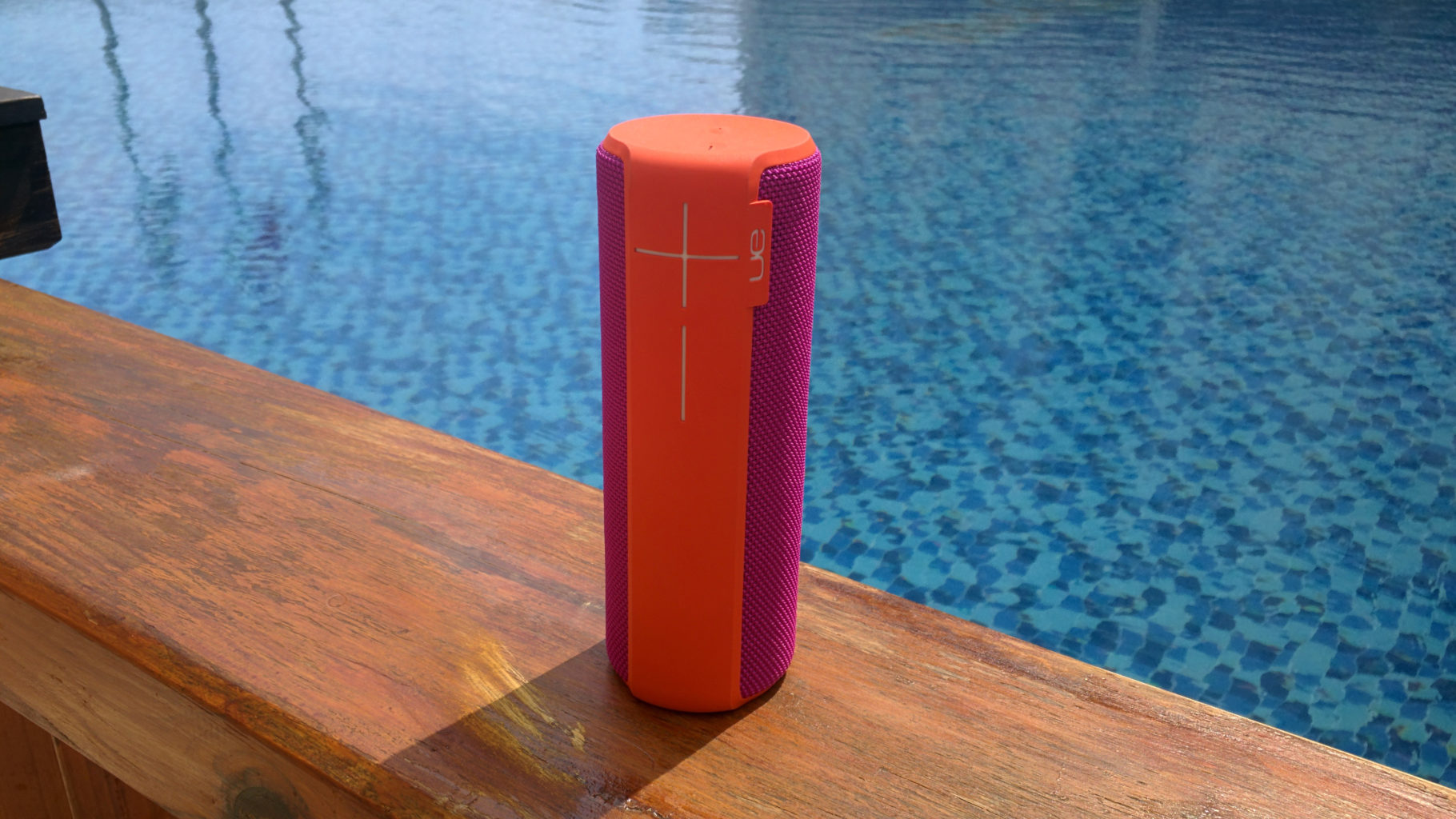









 The Original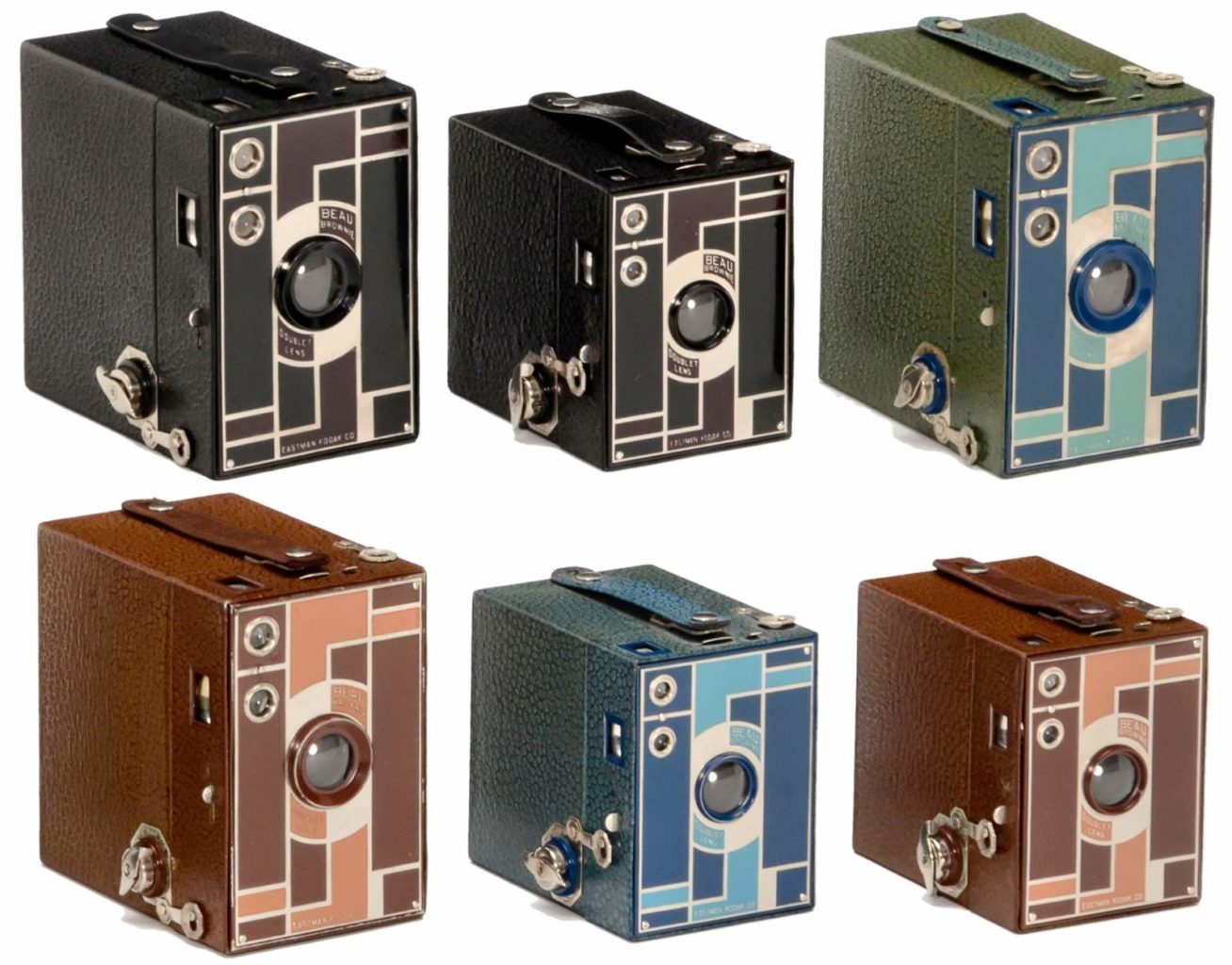
 Basic Operation
 The Final Thought


/cdn.vox-cdn.com/uploads/chorus_image/image/59845079/amazon-echo-verge-9711.0.0.jpg)